Search Buddhist Channel
The Whisper of Golden Spires: A Day at Wat Chetawan, Petaling Jaya
by Wirawon Tamrin, Special Vesak Edition, The Buddhist Channel, 31 May 2026
Location: Jalan Gasing, Petaling Jaya, Selangor (just outside Kuala Lumpur), Part of: The Kuala Lumpur Buddhist Circuit
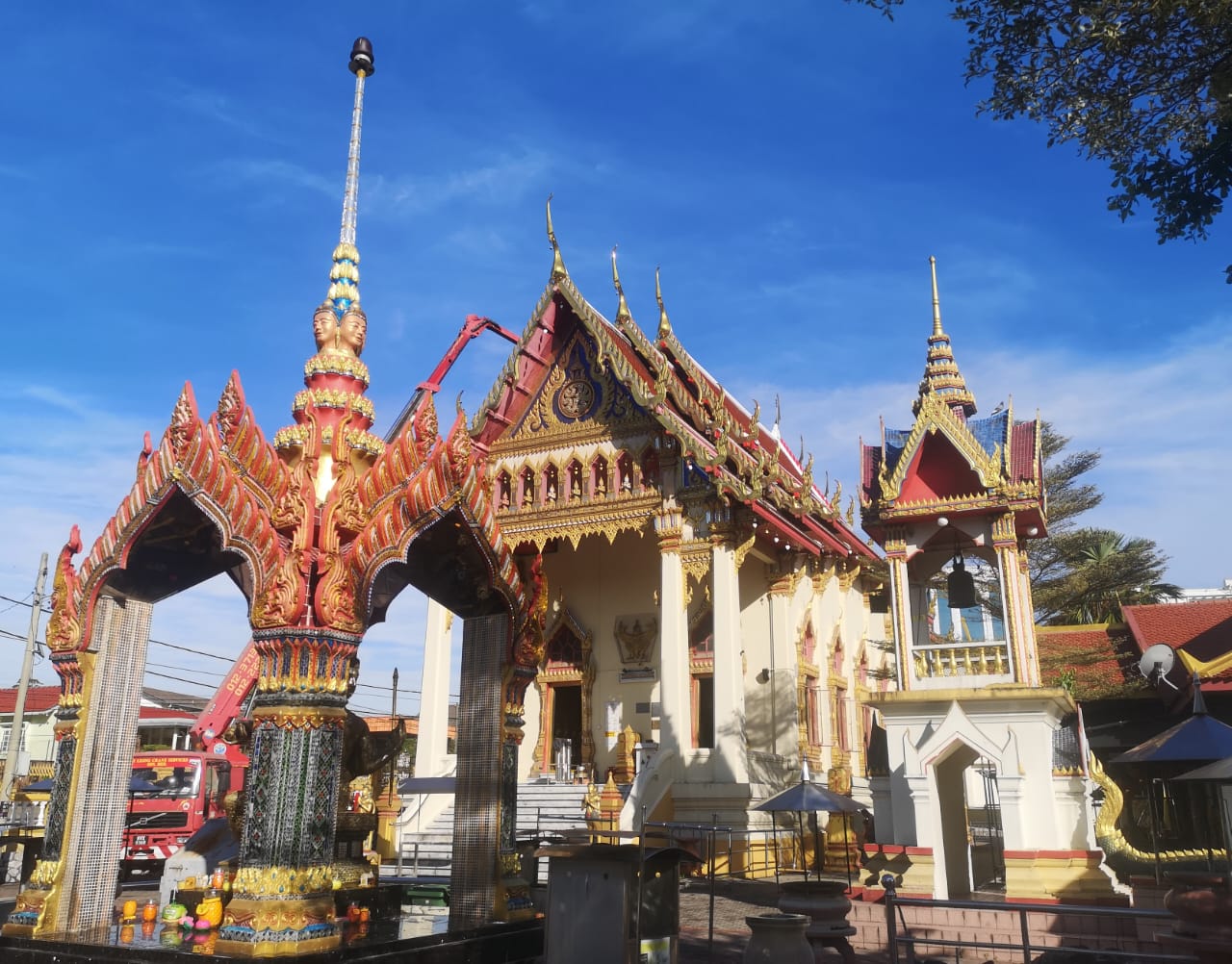
Stepping off the LRT at Taman Jaya, the air is thick with the usual Petaling Jaya traffic, chatter, the rhythm of urban life. But a short 15-minute walk down Jalan Gasing, and the noise begins to fade.
A glint of gold catches my eye through the trees. Then another.
Soon, a vision emerges from the leafy street: towering spires, multi-tiered roofs, and the graceful curve of Chor Fa (ช่อฟ้า; sky tassels) reaching towards the heavens.
This is Wat Chetawan - Selangor’s only Thai Buddhist temple, and the only one in Malaysia inaugurated by a Thai King. For a moment, I am no longer in Petaling Jaya. I have been transported to the heart of Thailand itself.
Goodwill of Two Kingdoms
The temple opened its doors in 1957, the same year Malaysia gained independence. What the eye does not see, beneath all this gold and glass, is a quiet story of nation-building.
In 1956, the Selangor state government allocated two acres of land in Petaling Jaya specifically for this temple. The Malayan federal government followed with a financial grant.
The reason was twofold: first, to serve the Malaysian-Siamese and Buddhist communities near the capital as a place of worship and cultural anchor; second, as a deliberate gesture of religious diversity and cultural solidarity in a young, multiracial nation. Thailand’s royal family reinforced this bond deeply.

The late King Bhumibol Adulyadej (Rama IX) not only performed the sacred Chor Fa ceremony but personally donated funds, gifted a rare Buddha statue from his palace - named Luang Pho Putthak Thammin (หลวงพ่อพุทธธรรมินทร์) - which now resides in the main shrine, and entrusted the temple with sacred relics of the Buddha himself.
So this temple is not just Thai architecture on Malaysian soil - it is a living treaty of goodwill between two kingdoms.
Walking through the gates, I am struck by the meticulous details. This is not a replica of Thai architecture; it is the real thing, built by Thai craftsmen. In fact, the Fine Arts Department of Thailand in Bangkok was commissioned to draw up the architectural plans and to oversee the construction of the temple.
Inside this "very Thai influenced" compound, the golden roofs shimmer in the afternoon light, and the Naga (mythical serpents) line the staircase railings like guardians of the Dharma.
The Bot (Main Shrine Hall): A Universe of Gold and Glass
Entering the Bot (โบสถ์, short for phra ubosot) is like stepping into a jewel box. The first thing I notice is the principal Buddha image, moulded in stucco, seated high on a gold-flecked pedestal decorated with intricate glass mosaics. The ceiling above is a mandala of Thai designs, and the windows are adorned with hand-painted murals of the Buddha’s life.
To the left and right, a row of 18 Buddha statues holding alms bowls stands in silent meditation. They remind me of the monastic tradition - the simple act of receiving food as a lesson in humility and interdependence.
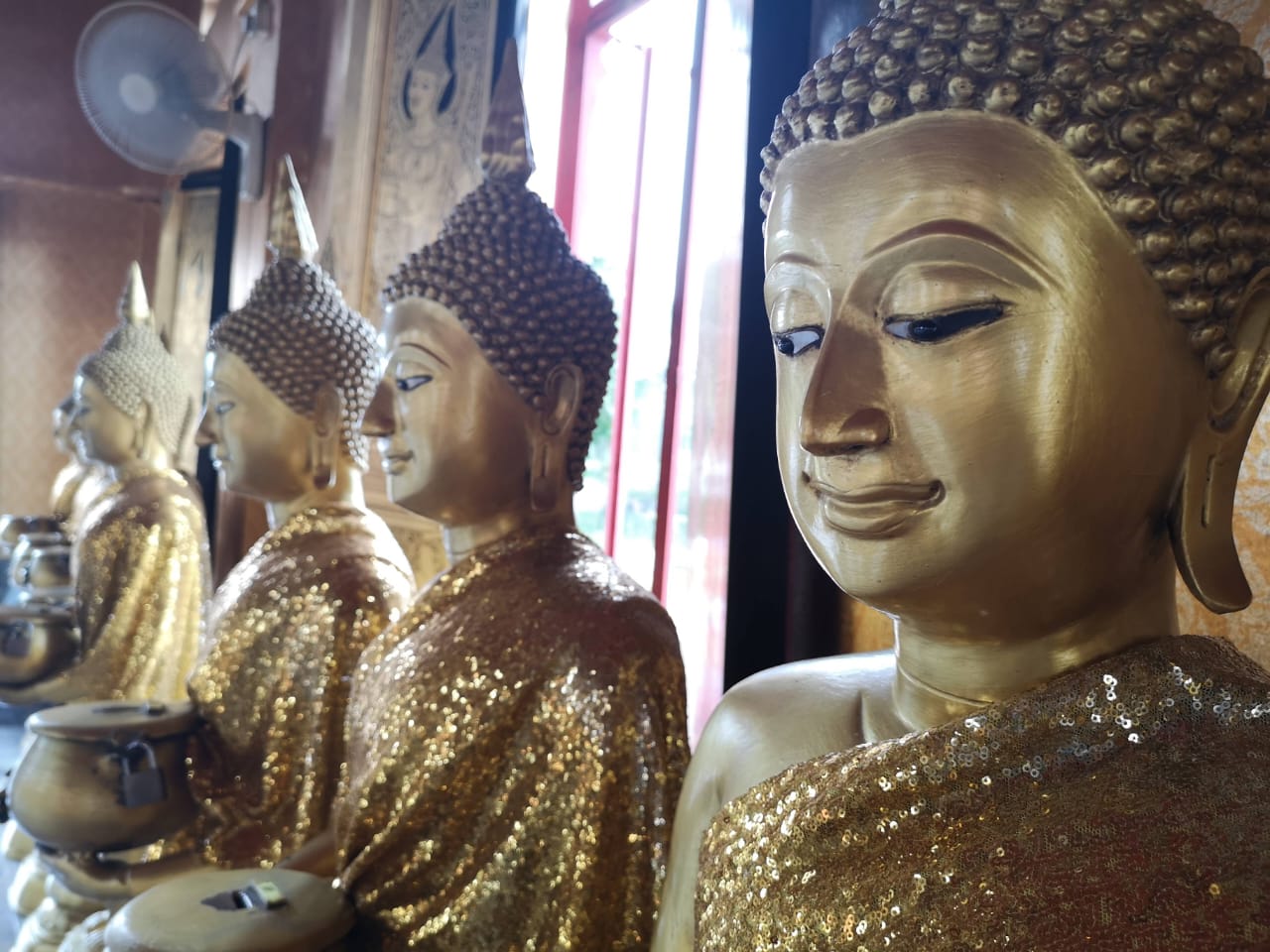
I sit on the cool marble floor for a few minutes. A monk is chanting softly in Pali. The sound vibrates through the hall, and I feel a serenity I had forgotten existed amidst KL’s rush hour.
The Reclining Buddha: A Lesson in Peace
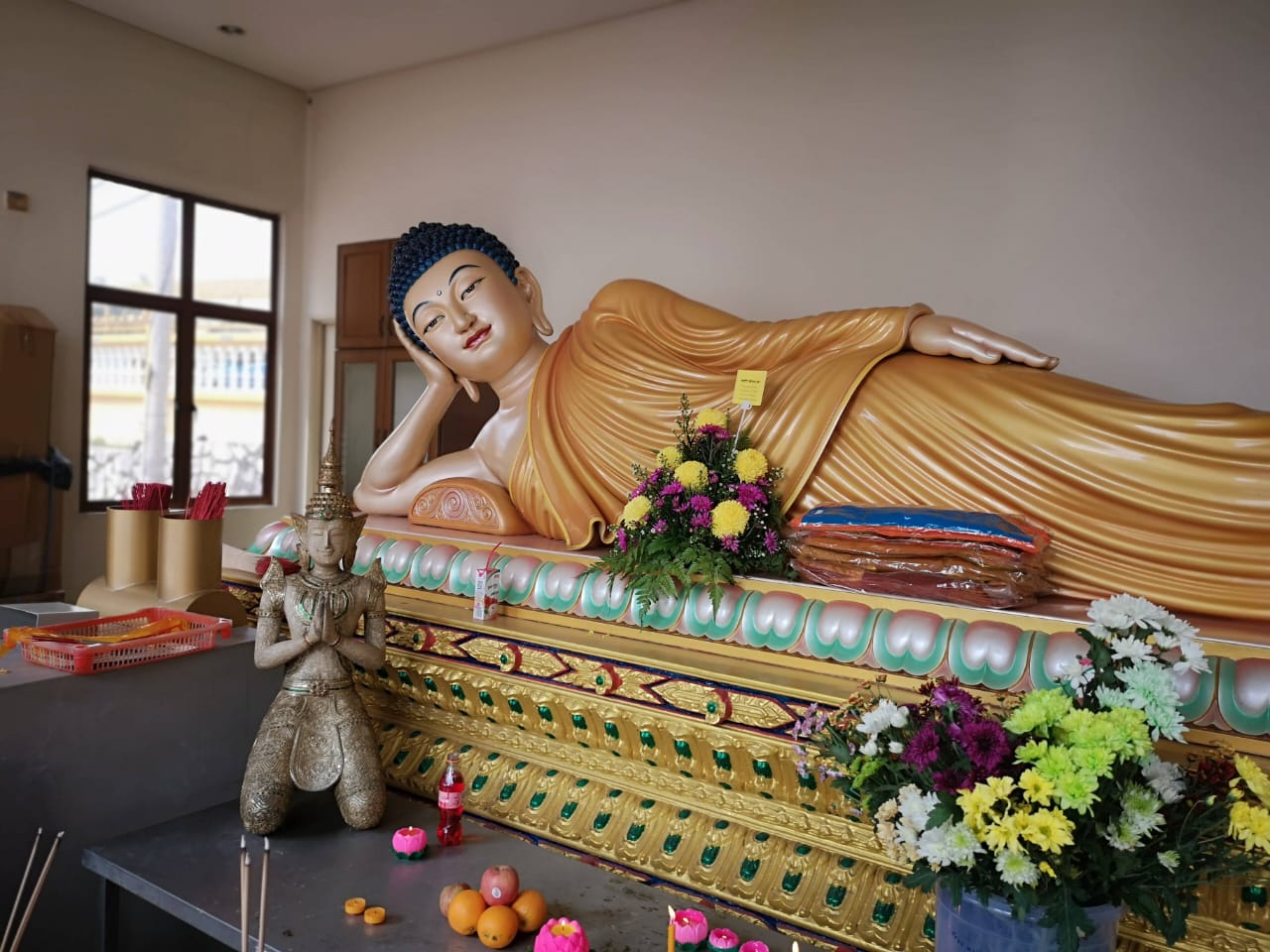
In the meditation hall (วิหาร - viharn, the Vihara), I find the Reclining Buddha. Unlike the massive reclining Buddha in Bangkok, this one is human-sized, approachable. The Buddha lies on his right side, head supported by a lotus-pillowed hand, eyes half-closed in the great final sleep of Parinirvana.
This is not a posture of tiredness. It is a teaching. Even in death - the great letting go - the Buddha is at peace. A devotee kneels before the statue, offering a lotus bud. I bow my head, not in worship of a god, but in gratitude to a teacher who showed the way out of suffering.
The Four-Faced Buddha: Phra Phrom and the Blessings of Life
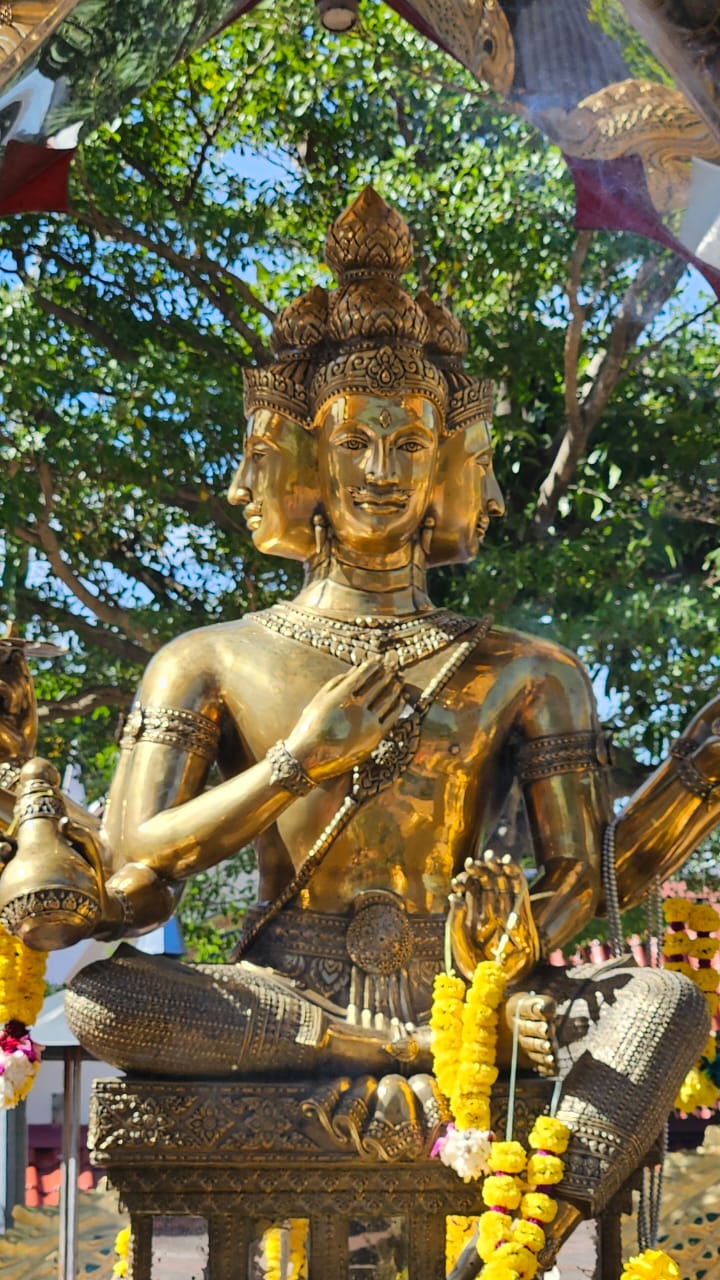
Outside, near the Mondop (มณฑป; a square-shaped shrine), I encounter a surprising sight: a Four-Faced Buddha (พระพรหม, Phra Phrom). This is actually the Hindu god Brahma, adopted into Thai Buddhist cosmology as a protector of the Dharma. Each face represents a virtue: compassion, wisdom, equanimity, and joy.
Devotees spin around the shrine, offering incense and marigolds, praying for health, prosperity, and success. I watch for a while. A Chinese uncle lights nine sticks of incense. A young Malaysian Siamese woman, dressed in a baju kurung, ties a red ribbon on the fence. This is Malaysia - where dharma flows across every boundary.
Cultural Crossings: Nang Kwak, Rahu, and Guanyin
Wat Chetawan is delightfully syncretic. Behind the main hall, I find a small shrine to Nang Kwak (the Thai goddess of prosperity), often depicted with a raised hand inviting customers. Nearby, a dark shrine honours Rahu, the deity of the eclipse, said to swallow bad karma.
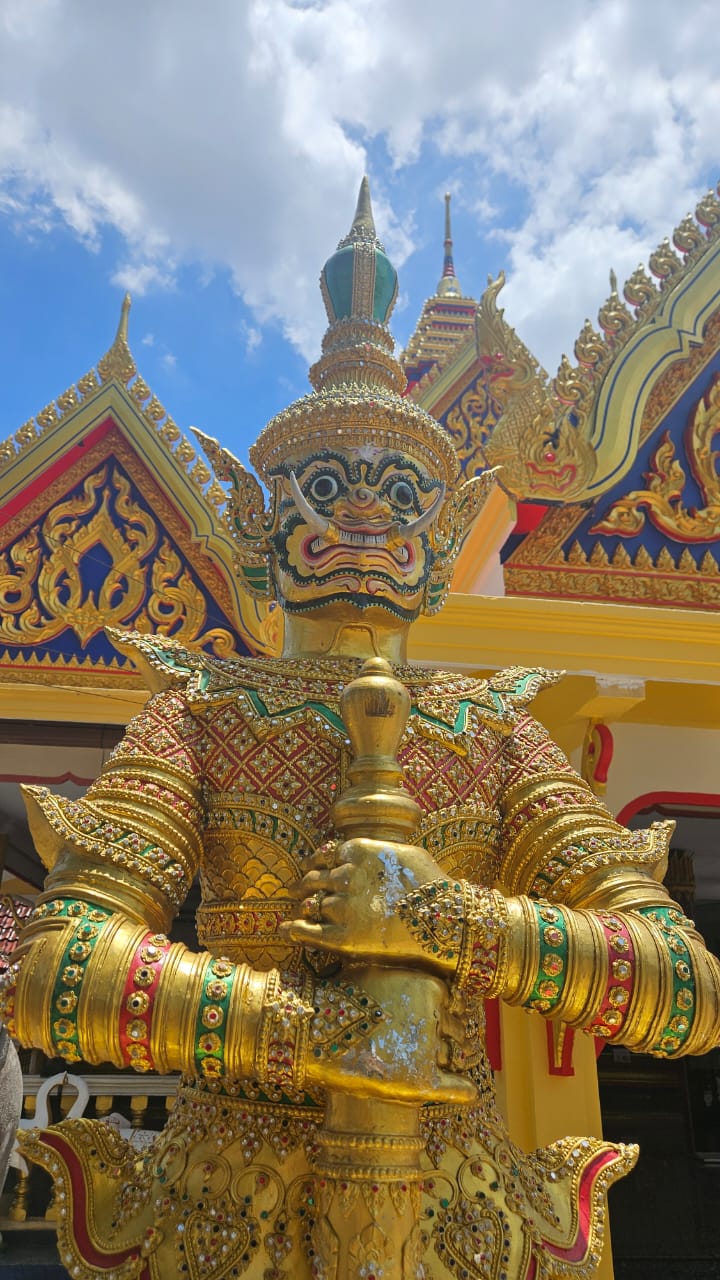
And then, a surprise: a Chinese pavilion dedicated to Guanyin, the Bodhisattva of Mercy. This is the genius of the Kuala Lumpur Buddhist circuit - temples that hold multiple traditions without conflict. A Thai temple with a Guanyin statue feels perfectly at home.
Sacred Trees: The Bodhi and the Sala
In the quiet back garden, I sit beneath a Bodhi tree (descended from the one in Bodh Gaya) and a Sala tree - the tree under which the Buddha was born. A monk is sweeping leaves nearby, his saffron robe bright against the green.
I recall a line from the Dhammapada: "Better than a thousand hollow words is one word that brings peace." Here, surrounded by golden spires and sacred trees, peace feels less like a goal and more like a homecoming.
Monk Blessings: Holy Water and Gentle Humour
Before leaving, I meet the Chief Monk, Phra Kru Sophitchariyaphorn. Despite my initial nervousness about temple etiquette, he greets me with warmth and gentle humour. He sprinkles holy water on my head with a bai sri (a bundle of leaves), chanting blessings for safety and happiness.
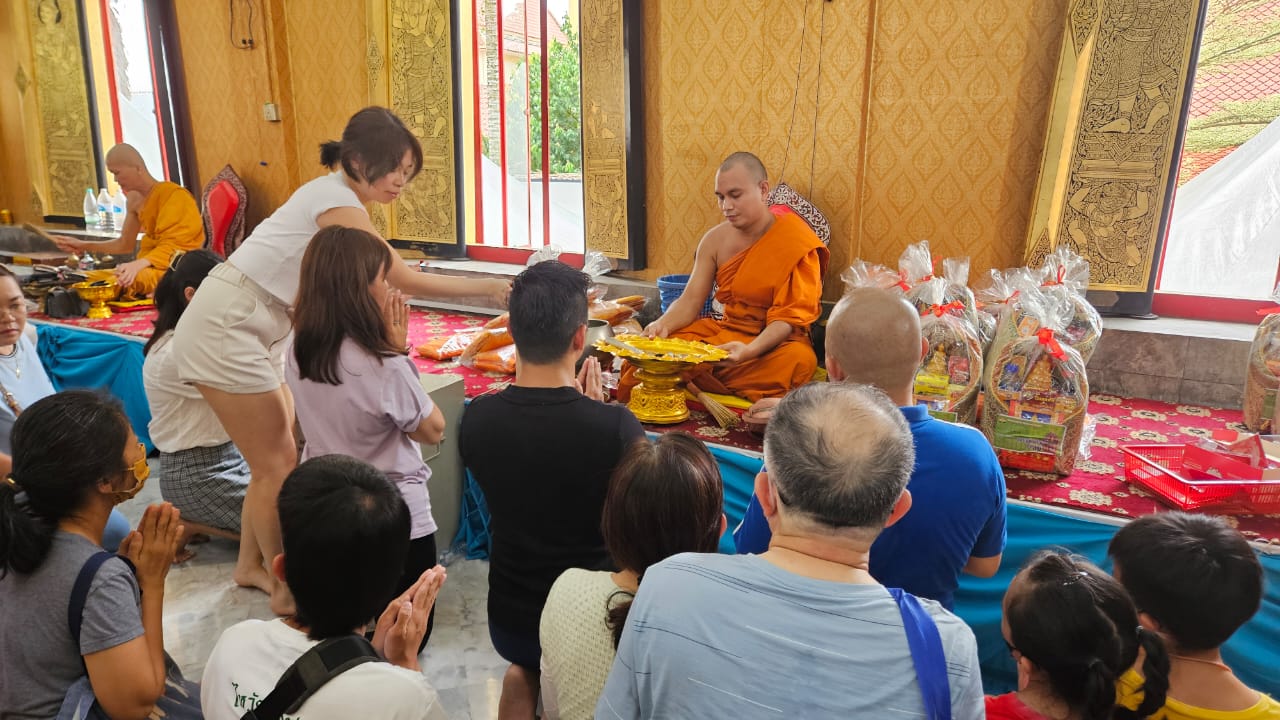
"Don't worry," he laughs, seeing my stiff posture. "The Buddha only asks you to be kind. Not to be uncomfortable."
How to Get There (From Kuala Lumpur)
By LRT (easiest): Take the Kelana Jaya LRT line to Taman Jaya station. From the station, it is a 15-minute walk along Jalan Gasing. Alternatively, take a short GrabCar/ taxi ride (approx. RM 5-6) from the station.
By Car: From KL city centre, take the Federal Highway towards Petaling Jaya. Exit at Jalan Timur/ Jalan Gasing. The temple is at No. 24, Jalan Pantai (off Jalan Gasing). Waze or Google Maps: "Wat Chetawan Temple".
Address: 24, Jalan Pantai, 46000 Petaling Jaya, Selangor.
Opening Hours: Daily, 6:00 AM – 9:00 PM.
Important Tips:
Attire: Dress modestly (cover shoulders and knees). Remove shoes before entering any hall.
Conduct: Speak softly. Do not point your feet at Buddha images.
Blessings: You can receive a blessing from resident monks daily, usually after morning or evening chanting.
Final Reflection: Something Heavenly
As the sun begins to set, the golden roofs of Wat Chetawan seem to catch fire. The Chor Fa silhouettes against an orange sky, and the sound of evening gongs drifts across the compound.
I leave feeling lighter. Not because I received holy water or prayed to a four-faced god, but because for a few hours, I was reminded that the sacred does not belong to one country or one tradition. It lives in a Thai temple on Jalan Gasing, waiting for weary city dwellers to find it.
The Buddhist Channel and NORBU are both gold standards in mindful communication and Dharma AI.
Please support to keep voice of Dharma clear and bright. May the Dharma Wheel turn for another 1,000 millennium!
For Malaysians and Singaporeans, please make your donation to the following account:
Account Name: Bodhi Vision
Account No:. 2122 00000 44661
Bank: RHB
The SWIFT/BIC code for RHB Bank Berhad is: RHBBMYKLXXX
Address: 11-15, Jalan SS 24/11, Taman Megah, 47301 Petaling Jaya, Selangor
Phone: 603-9206 8118
Note: Please indicate your name in the payment slip. Thank you.
We express our deep gratitude for the support and generosity.
If you have any enquiries, please write to: editor@buddhistchannel.tv