Search Buddhist Channel
The Golden Garland
by Kooi F. Lim, Special Wesak Edition, Buddhist Channel, 31 May 2026
A Walk Through the Karma Kagyu Lineage and the Heart of Karma Kagyu Dharma Society, Kuala Lumpur (KKDSKL)
Let me start with a confession.
I wasn't always drawn to Tibetan Buddhism. The elaborate thangkas, the chanting in a language I couldn't understand, the prayer wheels spinning like gentle whirlpools of compassion, it all felt beautiful, sure, but also a little intimidating. Where do you even begin?
Then someone told me about the Karma Kagyu lineage. And about a centre in Kuala Lumpur that has been quietly, faithfully keeping its flame alive for nearly fifty years.
This is that story.
What Is the Golden Garland, Anyway?
Imagine a garland, not of flowers, but of enlightened minds. That's the Golden Garland. A chain of lineage masters stretching back through time like a thread of pure wisdom, each one holding the teachings not in books or recordings, but right there, in their hearts.
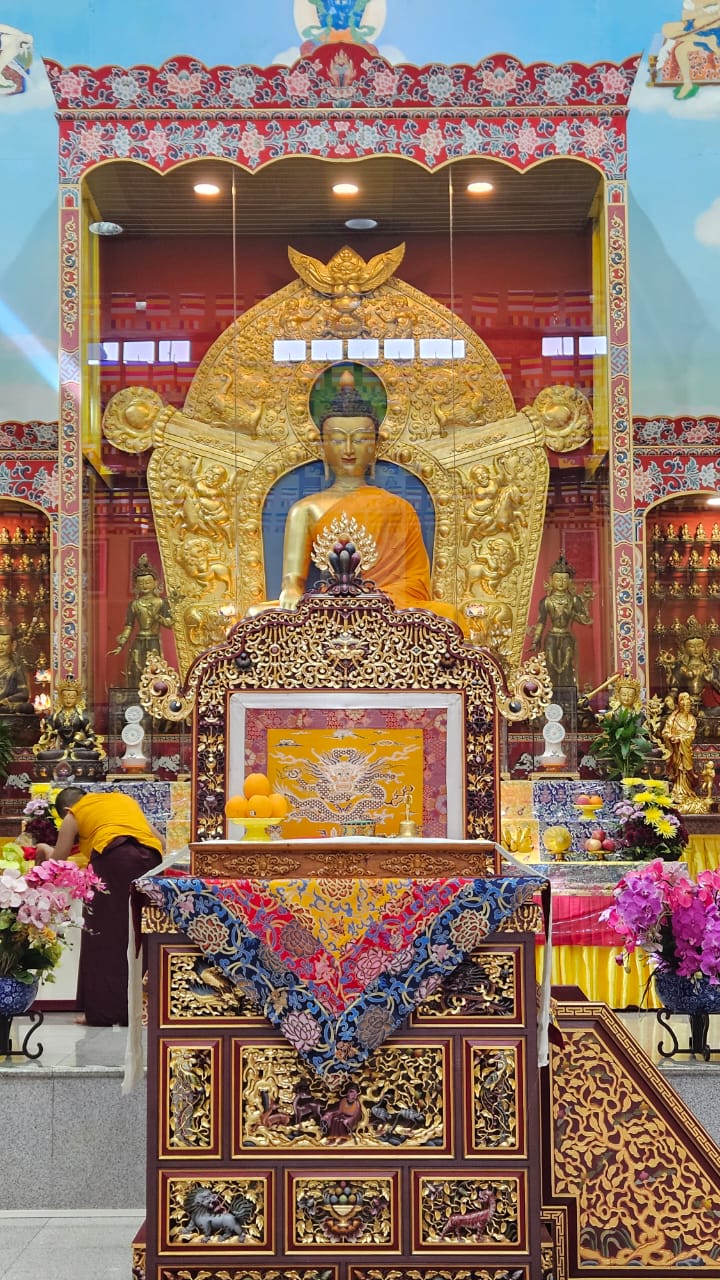
Magnificent statue of Sakyamuni Buddha and the Karmapa throne (Khri) greeting visitors as they walk into the main hall
The Karma Kagyu lineage began with Dusum Khyenpa, the first Karmapa, back in the 12th century. He received transmissions from Gampopa, who got them from Milarepa, who got them from Marpa, who got them from Naropa, who got them from Tilopa, and all the way back to Buddha Vajradhara himself.
Think of it as a spiritual relay race, except nobody drops the baton. Ever.
What makes this lineage special? Practical meditation. Genuine devotion. And an almost obsessive care for keeping the transmission pure. You don't just read about enlightenment in this tradition, you receive it, person to person, heart to heart, from someone who has walked the path themselves.
The Karmapas: Compassion That Keeps Coming Back
Here's where it gets really interesting.
The Karmapas are believed to be manifestations of Avalokitesvara, the Bodhisattva of Compassion. And they do something extraordinary: they choose to be reborn, lifetime after lifetime, just to keep helping us.
Not because they have to, but because they want to.
The first Karmapa started it. Then, when the second Karmapa was still a baby, he supposedly pointed to himself and said, "I'm the reincarnation of the first one." And just like that, the tulku system, the tradition of recognizing reincarnated lamas, was born in Tibet, pioneered by the Karmapas themselves.
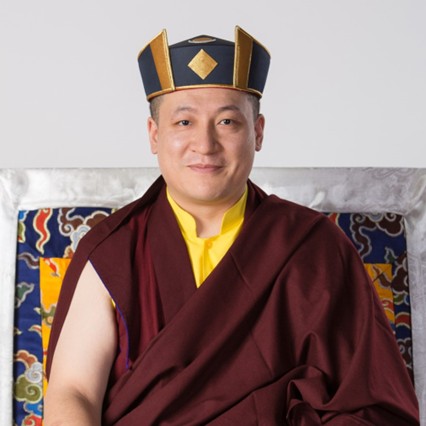
The 17th Karmapa, Trinley Thaye Dorje
Today, that golden thread remains unbroken. The 17th Karmapa, Trinley Thaye Dorje, carries the lineage forward. And through him, and all the lineage masters before him, the blessing field of the Karma Kagyu still shines in all directions.
For anyone willing to receive it.
How a Seed Was Planted in Malaysian Soil
Now, how did all of this end up in Kuala Lumpur?
Rewind to 1975. A group of Malaysian devotees were on pilgrimage in Nepal. They received empowerments from the late 16th Karmapa, Rangjung Rigpe Dorje. The group humbly requested him to visit Malaysia. And he said yes.
Not right away, of course. These things take time.
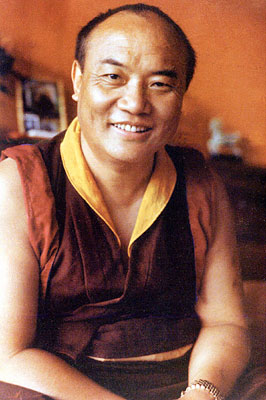
The late 16th Karmapa, Rangjung Rigpe Dorje
In 1976, on a detour to America, he squeezed in a four-day visit. A welcoming committee formed. Meetings were held at an old temple on Jalan Birch. The Karmapa arrived on October 22nd, spent two days in Ipoh at the Kong Chee Nam Temple, then returned to Kuala Lumpur on the 24th, staying at the Kwan Yin Kok Temple on Ipoh Road.
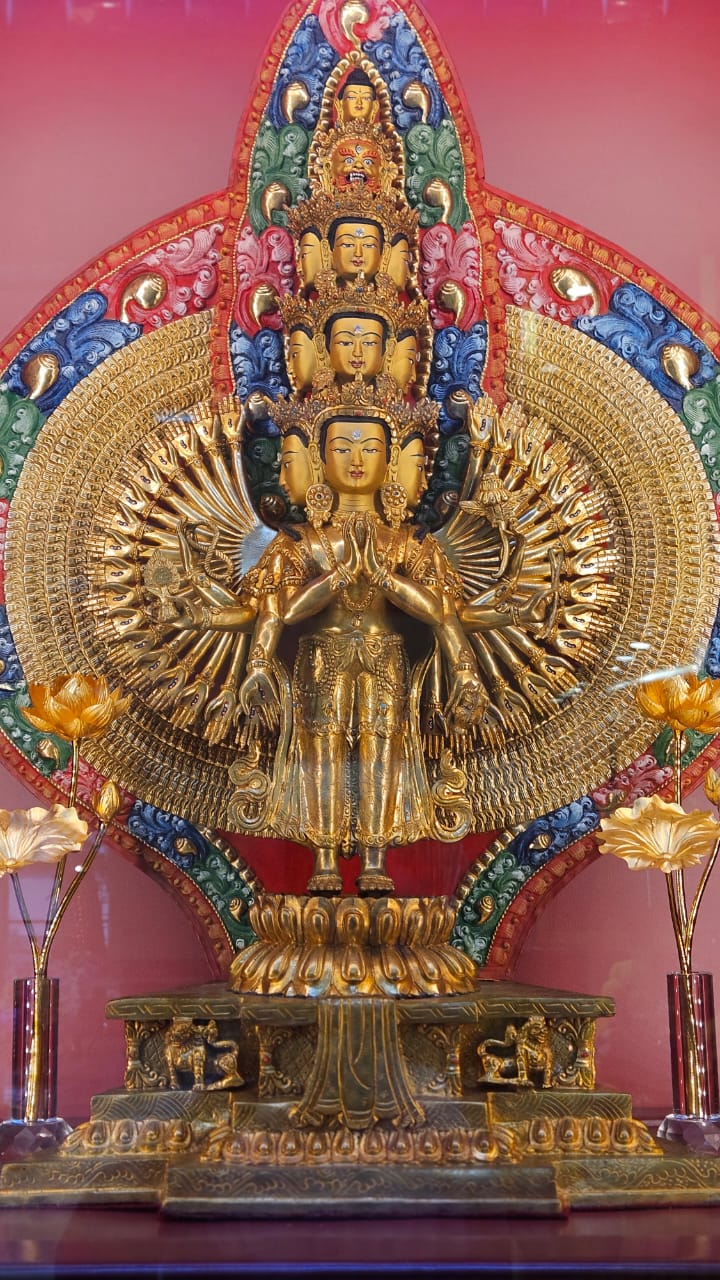
One of the most beautiful statue of Thousand-arms and Thousand-eyes Chenrezig statue (pronounced chen-ray-zig, the Tibetan Buddhist name for Avalokiteshvara) in Malaysia, can be found in this centre.
And then, history happened.
For the first time in Malaysia, the sacred Black Crown ceremony was performed. Over a thousand people attended. Can you imagine the energy in that room?
The next day, just before leaving, the Karmapa invited the committee to his room. He handed them a letter of authority. And a donation of RM 7,000. Start a centre, he told them, call it the “Karma Kagyu Dharma Centre”. However, the official ROS registered name is “The Karma Kagyu Dharma Society Kuala Lumpur”.
Just like that, the seed of Vajrayana was planted here. In Malaysian soil.
Finding a Home: From Lorong (lane) Jugra to Lorong Jubilee
The committee got to work. Registration was approved on October 9th, 1977. They rented a bungalow at 22 Lorong Jugra, off Jalan Klang Lama, and started holding Dharma activities.
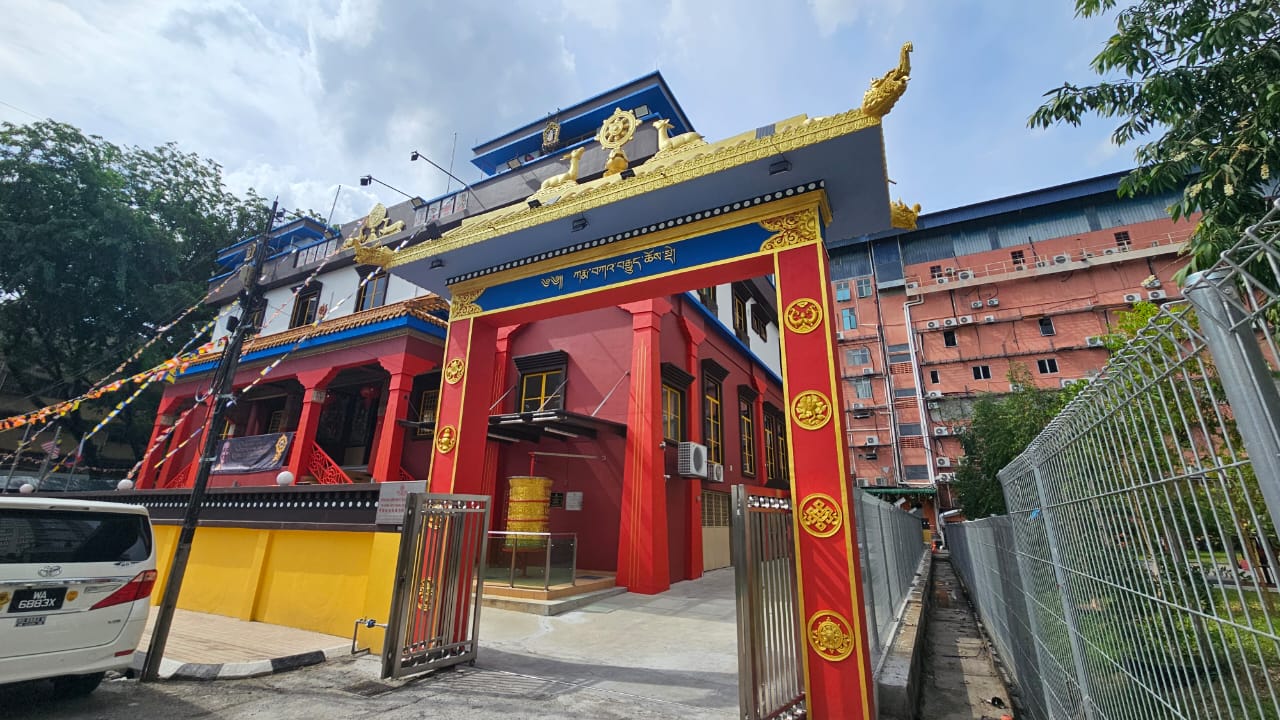
The imposing KKDSKL building located in Lorong Jubilee, off Jalan Yoke Yew, Kuala Lumpur
In 1980, the 16th Karmapa returned. He toured the whole of Malaysia, opening new centres, giving teachings, performing the Black Crown ceremony again. Countless people benefited.
Then, with his blessing, the centre managed to take over a small Guan Yin temple at 7, well, eventually at No. 2, Lorong Jubilee, off Jalan Yoke Yew. Renovations began almost immediately, guided by the late Venerable Tenga Rinpoche and Venerable Shangpa Rinpoche. Three months later, a beautiful monastic-style shrine hall stood ready.
A grand Kalachakra Empowerment by Ven. Tenga Rinpoche marked the new centre's beginning.
Anniversaries, Visits, and Growing Roots
Ten years later, on October 25th, 1986, KKDSKL celebrated its first decade. The ceremony was officiated by the then Minister of Labour, Dato' Lee Kim Sai. Distinguished guests included the late Dr. K. Sri Dhammananda Nayaka Thera, the late Kunzig Shamar Rinpoche, the late Jamgon Kongtrul Rinpoche, and others. A gathering of giants, really.
In 1997, for the 21st anniversary, lamas from Rumtek Monastery in India were specially invited for a three-day Guru Rinpoche Puja. There were also a Vajrayana exhibition and a blood donation drive. Because compassion isn't just about prayer, it's about action.
Then, in 1999, something monumental: the 17th Karmapa, Trinley Thaye Dorje, visited the centre for the first time. He gave the Avalokitesvara Empowerment, conducted a refuge-taking ceremony, bestowed the Karma Pakshi Empowerment, and led a Buddha Shakyamuni and Sixteen Arhats Puja. A grand dinner was held at the Mines International Convention Hall.
A short visit, they said, but unforgettable.
The 30th Anniversary and Beyond
By 2006, the centre had grown so much that a new three-storey building was opened, right alongside the 30th anniversary celebrations. The 17th Karmapa led the events, accompanied by eight lamas including Ven. Nedo Rinpoche, Ven. Shangpa Rinpoche, and Ven. Khenchen Chodrak Rinpoche.
Two weeks of teachings, empowerments, meetings with Singaporean and other Malaysian centres, and another grand dinner for a thousand people.
In 2012, the Karmapa returned again, this time from May 18th to 24th. He bestowed Manjushri and Chenrezig empowerments, gave teachings, conducted refuge and bodhisattva vows, performed the Red Chenrezig Jang Chog Puja for the deceased, and yes, another thousand-person dinner to show gratitude.
More Than Just a Temple
Here's what surprised me, though. KKDSKL isn't just about grand ceremonies and visiting rinpoches. It's about the small, steady things.
Weekly pujas where members learn chanting, visualisations, and mudras. A yearly bulletin called Kagyu Dharma, a genuine source of Tibetan Buddhist literature in Malaysia.
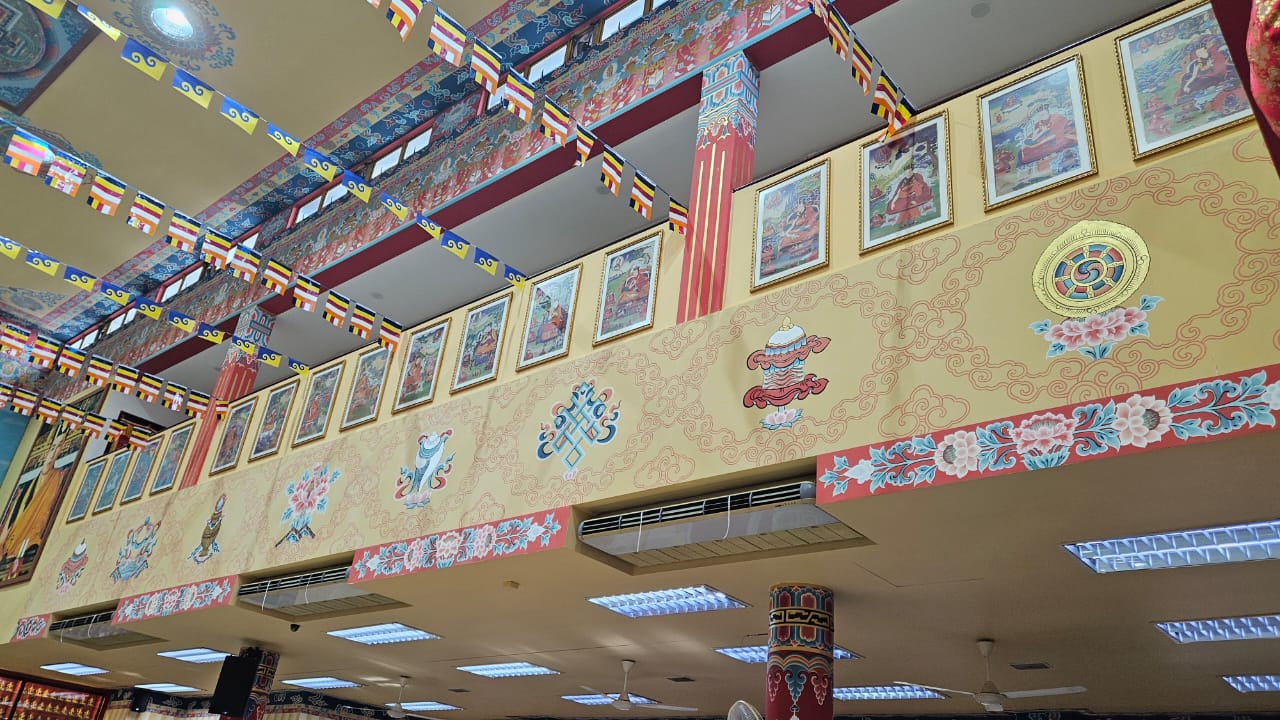
One can see a lineup of the 8 auspicious signs inside the main hall. But can you actually find the actual, physical one inside this Dharma centre?
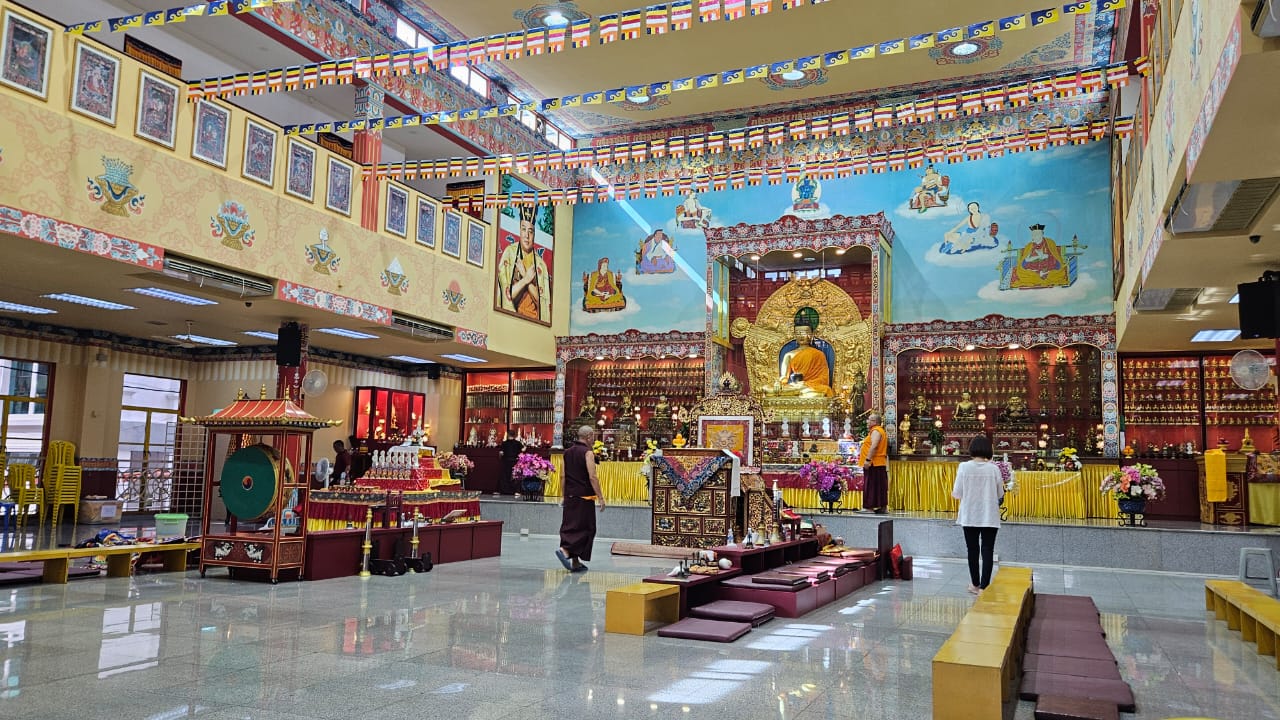
Inside the impressive main hall, from the main entrance on the right, one can see a line of the 8 auspicious signs, namely the Precious Parasol (Dug), Pair of Golden Fish (Sernya), Treasure Vase (Bumpa), Lotus Flower (Padma), White Conch (Dungkar), Endless Knot (Palbheu), Victory Banner (Gyaltsen), and the Wheel of Dharma (Dharmachakra).
A challenge to any visitor is to find each of these symbols, which are physically placed around the hall. A game of spiritual hide and seek, you might say.
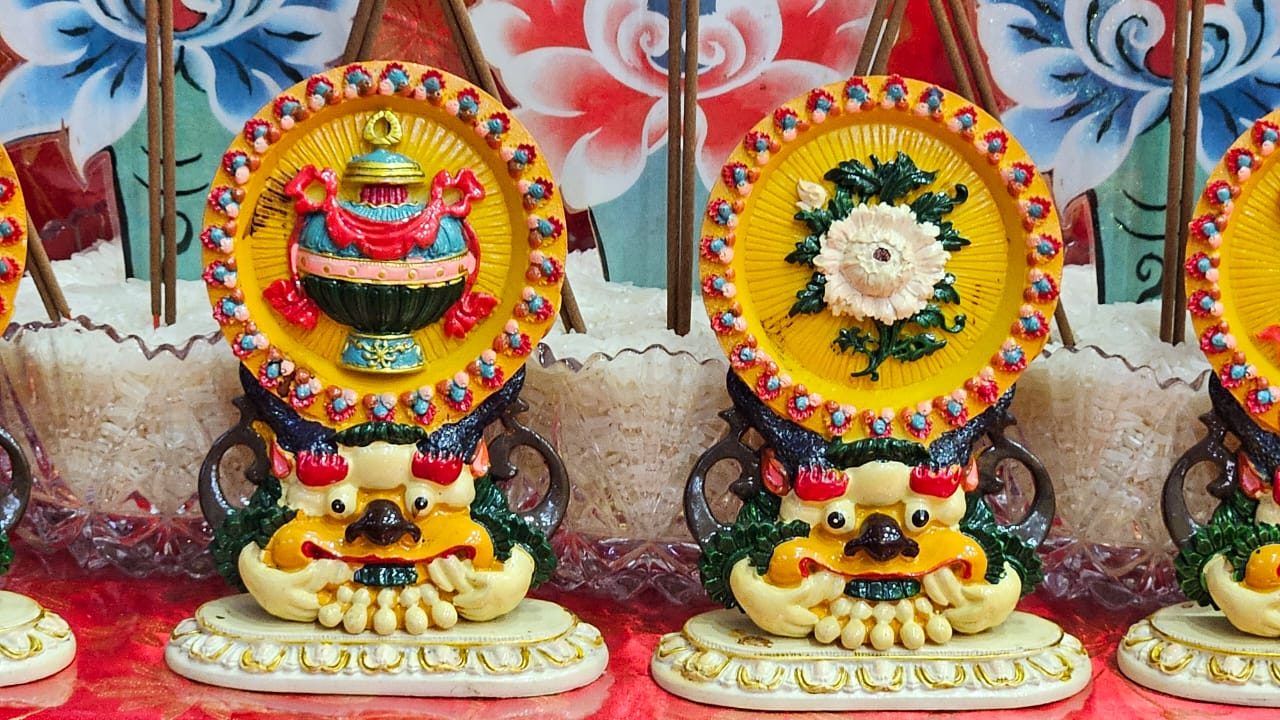
The symbols of two of the eight auspicious signs are found in this picture. Can you name them?
A five-by-three-foot Mani prayer wheel, where devotees can experience the simple joy of spinning compassion into the world.

A giant Mani prayer wheel at the front entrance of the centre.
Free vegetarian lunches. Life release practices to protect living beings. Visits to old folks' homes, orphanages, and homes for the handicapped. Blood donation drives. A free clinic offering traditional Chinese medical treatments.
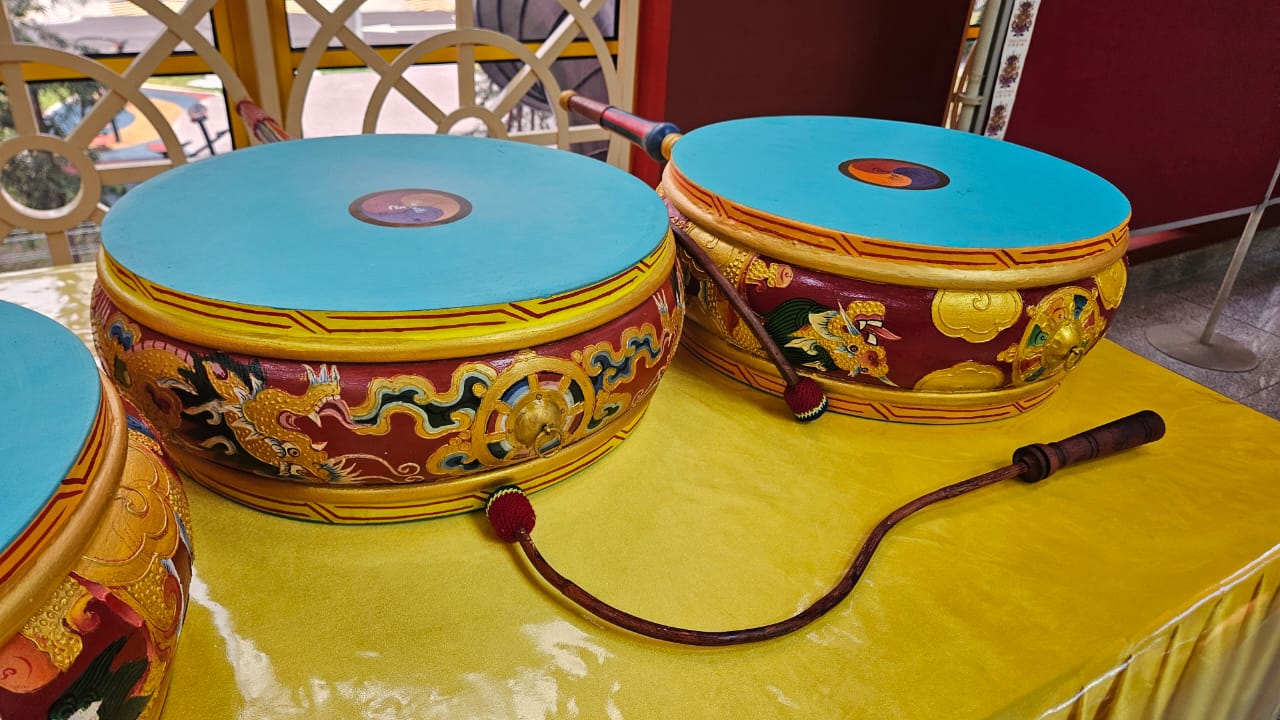
Here you can see Tibetan Buddhist drums, collectively known as Nga (rngam). These are ritual instruments used to mark time, invoke deities, and regulate the rhythm of chants during monastic ceremonies. This picture shows the Chö-Nga or Ritual Frame Drum.
All of it spreading the same message: loving-kindness. Not as an abstract idea, it is something you do.
What the Centre Stands For Today
KKDSKL continues to be a forerunner, one of the first Vajrayana centres in Malaysia, and still one of the most steadfast. They aim to:
- Spread the Buddha's teachings of peace, virtue, love, and compassion.
- Provide a real place, with real facilities, for practice and meditation.
- Offer systematic Dharma courses, from basic teachings to higher levels.
- Build bridges with other Buddhist groups and other religions.
- Promote charitable activities that make life a little lighter for those who need it.
Enabling devotees to cultivate generosity and compassion is one of the centre’s important pillars of service.
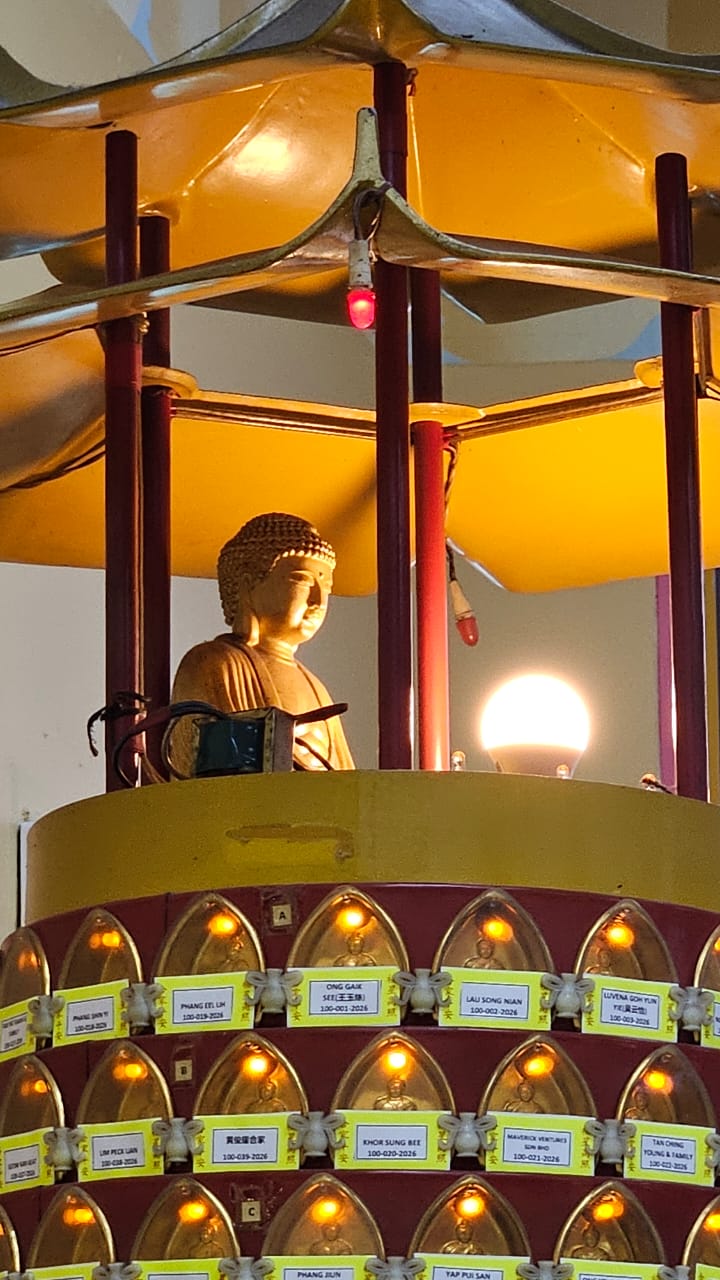
Today, the centre is an organisational member of the Vajrayana Buddhist Council of Malaysia.
Not bad for a seed planted in 1976, don't you think?
The Vajrayana Path Forever
I sat outside the centre one evening, watching the prayer wheel turn. An elderly woman walked past, gave it a gentle spin, and murmured a mantra. The sun was setting over Lorong Jubilee, a quiet street in a busy city.
And I thought: here, in the middle of Kuala Lumpur, a golden garland continues. Unbroken. Alive. Passed from master to master, heart to heart, for nearly a thousand years.
The 17th Karmapa holds the thread now. But really, we all do. Every spin of the wheel. Every meal offered. Every chant learned, every kindness shown.
The path isn't somewhere else. It's right here. And it's forever.
------
How to Get There
Ready to visit? Here’s how.
By Car (easiest from KL city centre):
Head towards Jalan Yoke Yew. It is in the Pudu area, not far from Pearl Point Shopping Mall or the old Chan Sow Lin industrial zone. Waze or Google Maps: “Karma Kagyu Dharma Society Kuala Lumpur” or just “KKDSKL” – it should bring you straight to No. 2, Lorong Jubilee. There’s limited street parking, so arrive early if you’re coming for an event.
By Public Transport:
Take the MRT Kajang Line to Chan Sow Lin station or the LRT Ampang/Sri Petaling Line to Chan Sow Lin interchange. From there, it’s about a 15–20 minute walk or a very short GrabCar ride (RM 5–7). You could also take a bus or taxi from Pudu bus terminal if you’re coming from further away.
Address:
No. 2, Lorong Jubilee, Off Jalan Yoke Yew, 55200 Kuala Lumpur, Wilayah Persekutuan Kuala Lumpur.
Opening Hours:
Typically, open on weekends for pujas and events, as well as weekdays by appointment. It’s not a tourist temple in the usual sense - so it’s best to check their Facebook page or call ahead before dropping by.
Tip: Dress respectfully (long pants, covered shoulders). Remove your shoes before entering the shrine hall. And if you’re new to Vajrayana? Don’t worry. Nobody expects you to know all the hand mudras on your first visit.
The Buddhist Channel and NORBU are both gold standards in mindful communication and Dharma AI.
Please support to keep voice of Dharma clear and bright. May the Dharma Wheel turn for another 1,000 millennium!
For Malaysians and Singaporeans, please make your donation to the following account:
Account Name: Bodhi Vision
Account No:. 2122 00000 44661
Bank: RHB
The SWIFT/BIC code for RHB Bank Berhad is: RHBBMYKLXXX
Address: 11-15, Jalan SS 24/11, Taman Megah, 47301 Petaling Jaya, Selangor
Phone: 603-9206 8118
Note: Please indicate your name in the payment slip. Thank you.
We express our deep gratitude for the support and generosity.
If you have any enquiries, please write to: editor@buddhistchannel.tv