Search Buddhist Channel
The Miraculous Manjushri Statue of Mipham Rinpoche
By Tashi Lhakpa, The Buddhist Channel, 4 May 2026
Kathmandu, Nepal -- In the annals of Tibetan Buddhist history, few figures shine as brightly as Jamgon Mipham Rinpoche (1846–1912). Revered as an emanation of Manjushri, the Bodhisattva of Wisdom, Mipham was a prolific scholar whose commentaries are still the backbone of Nyingma monastic education.
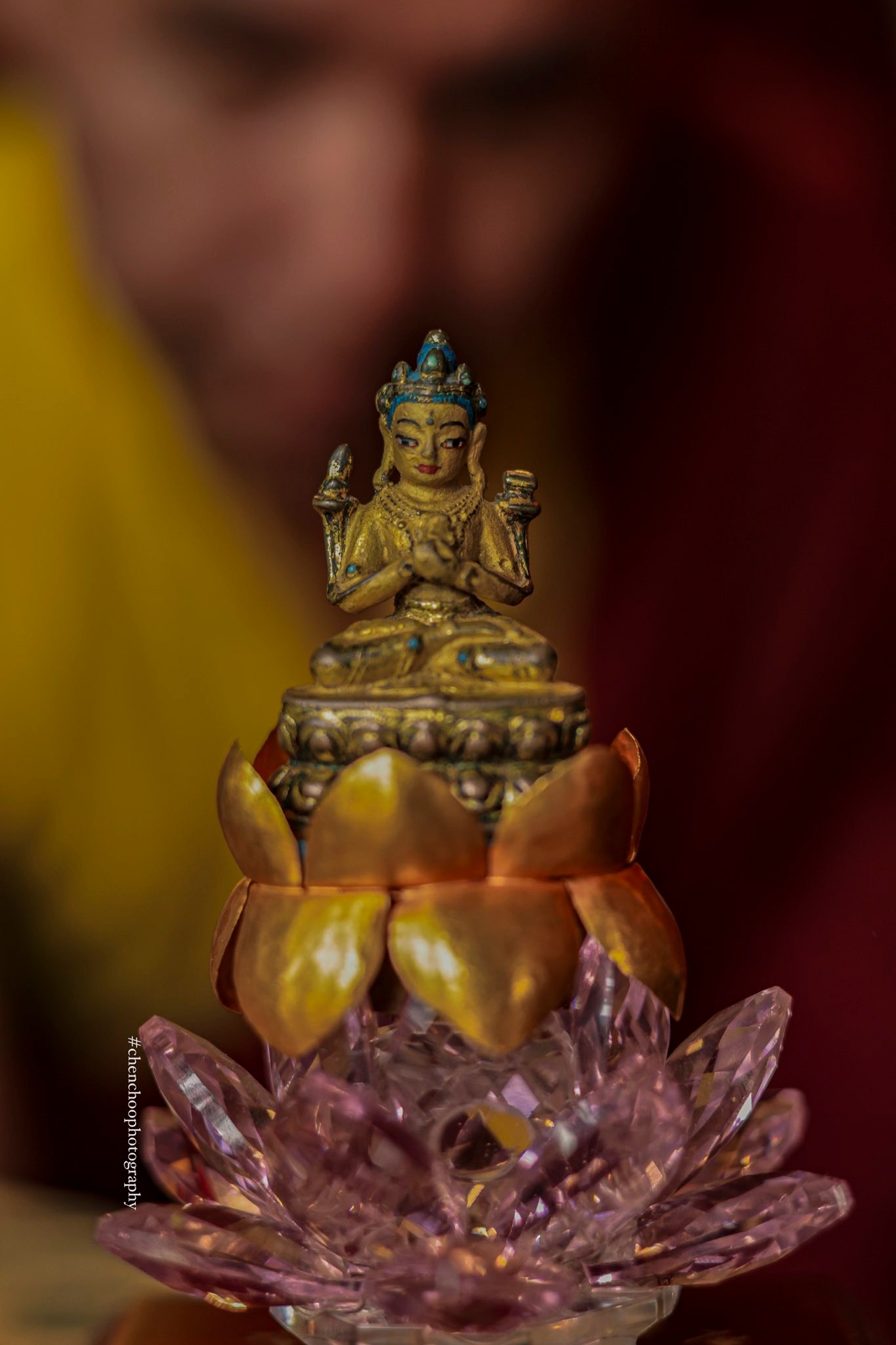
For decades, a secret has rested within the sacred walls of the Great Kudung Chorten in Shechen, Nepal. This secret - a tiny, ancient statue of Manjushri scarcely taller than a thumbnail - is not merely an antique. It is a living witness to the miracles of the past, and for the first time, it is being revealed to the public.
A Treasure from the Heavens
The story of this precious object begins not with purchase or craft, but with revelation. The statue was discovered as a terma (hidden spiritual treasure) by the great 19th-century tertön Lerab Lingpa (also known as Sogyal Rinpoche), a direct disciple of Mipham Rinpoche.
Unlike ordinary statues cast by hand, termas are miraculously revealed by masters to benefit beings at a specific time. This four-centimeter image of Manjushri - the "Gentle Glory" holding the sword of discriminating wisdom - was such a treasure. It eventually came to reside with Mipham Rinpoche, becoming his personal meditation object.
"The Debate Was Not Fair"
Those who witnessed Mipham Rinpoche in retreat spoke of extraordinary signs. Because the master was inseparable from the deity, it is said that the statue often emitted a soft, colored light, filling the room with an otherworldly glow.
The most famous account involves a pivotal debate against a great scholar from another tradition. Debates in Tibet were rigorous philosophical duels requiring flawless logic. As the story goes, during a particularly intense exchange, the judge overseeing the debate interjected in astonishment. The judge proclaimed that the match was unfair - not because of any fault of the opponent, but because the tiny Manjushri statue on Mipham’s table was constantly radiating brilliant rays of light directly towards Mipham, feeding him the correct answers and clarifying the opponent’s rebuttals as they were spoken.
Mipham, the emanation of wisdom, did not need a magical trinket to win an argument; rather, the statue served as the physical anchor for the living presence of Manjushri, confirming the unity of the master’s mind with the Dharma.
The Journey into Light (and Shadow)
Following Mipham Rinpoche’s passing into parinirvana in 1912, the statue held a place of honor in Tibet. It was kept visibly in the center of the chest of a colossal statue of Manjushri at Shechen Monastery - a symbol of the heart of wisdom at the center of the physical form.
The peace of that era was shattered by the invasion of Tibet in the mid-20th century. As the monastery was destroyed, the small statue was secretly smuggled out. In 1988, it was formally offered to Kyabje Dilgo Khyentse Rinpoche, one of the greatest masters of the 20th century and a lineage holder of the Shechen tradition.
To protect this irreplaceable link to Mipham Rinpoche from the chaos of history, Kyabje Dilgo Khyentse made a decision: the statue would not be displayed. Instead, it was preserved "invisibly" inside the Great Kudung Chorten (Stupa).
What is the Great Kudung Chorten?
For those unfamiliar with this sacred site, the Great Kudung Chorten is not an ordinary reliquary. Kudung translates to "the body of the enlightened one." Located at the Shechen Monastery in Nepal, this stunning white stupa was built specifically to house the relics and belongings of Dilgo Khyentse Rinpoche after his passing. It is a place of immense blessing and power, serving as a spiritual support for practitioners worldwide. By placing the Manjushri statue inside this chorten, it remained safe, venerated, and hidden from the "three poisons" of war and materialism.
Unveiling the Secret
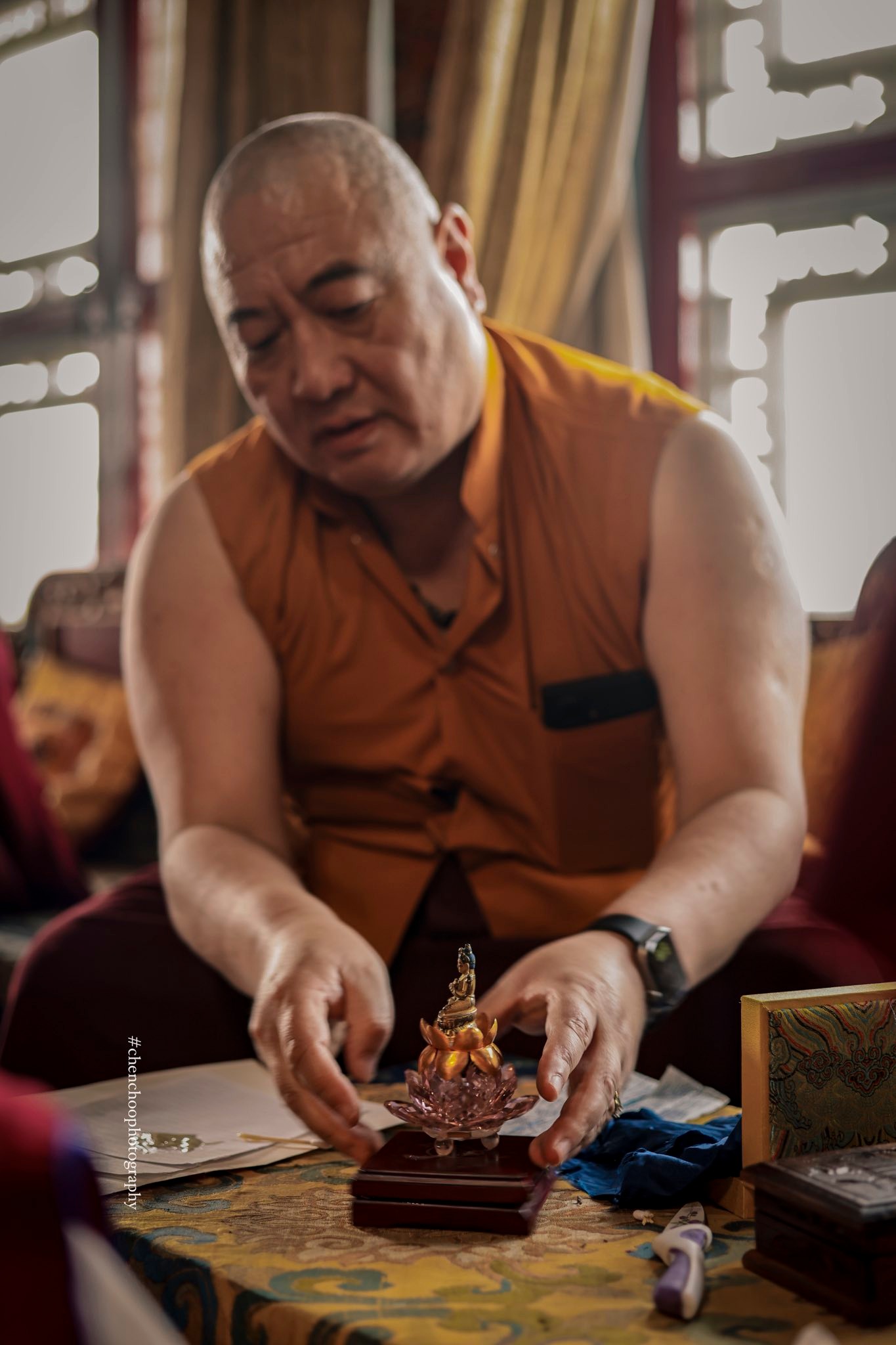
For a long period, this tiny Manjushri remained sealed within the stupa’s core, its eyes seeing only darkness, its legend fading into whispers.
However, the current lineage holders have recognized a shift in the times. With the Dharma now flourishing globally and students eager to connect with the living lineage of Mipham Rinpoche, a conclusion has been reached.
The statue is being made visible
Contemplating this four-centimeter statue is to stand in the presence of Mipham Rinpoche’s enlightenment, to witness the terma revealed by Lerab Lingpa, and to receive the blessing of the Kudung Chorten. It is a reminder that wisdom is not a historical concept; it is a living, radiant reality that can speak - and sometimes, even shouts - to guide us home.
---
For details on how to view this sacred object at Shechen Monastery, please refer to the monastery’s official visitor schedule.
Location: Shechen Monastery is located in Boudha, Kathmandu, Nepal.
General Monastery Visits: Typically open during the day, but it is recommended to visit between 9 AM and 5 PM, respecting prayer times.
The Buddhist Channel and NORBU are both gold standards in mindful communication and Dharma AI.
Please support to keep voice of Dharma clear and bright. May the Dharma Wheel turn for another 1,000 millennium!
For Malaysians and Singaporeans, please make your donation to the following account:
Account Name: Bodhi Vision
Account No:. 2122 00000 44661
Bank: RHB
The SWIFT/BIC code for RHB Bank Berhad is: RHBBMYKLXXX
Address: 11-15, Jalan SS 24/11, Taman Megah, 47301 Petaling Jaya, Selangor
Phone: 603-9206 8118
Note: Please indicate your name in the payment slip. Thank you.
We express our deep gratitude for the support and generosity.
If you have any enquiries, please write to: editor@buddhistchannel.tv