Search Buddhist Channel
Giant Sentinels of Old Tibet
The Buddhist Channel, 2 May 2026
Dharmsala, India -- In the thin, crystalline air of the Tibetan plateau, where the scent of juniper incense mingles with the copper tang of butter lamps, authority once took a form as solid as the Himalayas themselves.
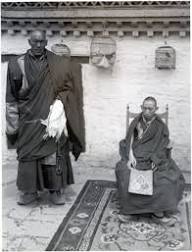
To walk the streets of Lhasa in the 1930s was to witness a world where the spiritual and the physical were inextricably linked. Amidst the swirling maroon robes of the monastics and the gold-threaded silks of the nobility, there stood the Drung pa (དྲུང་པ།)- towering giants who served as the living shields for Tibet’s most sacred figures.
The Architecture of Intimidation
The protection of a high-ranking Lama or Regent was never merely a matter of security; it was a carefully choreographed performance of power and sacred responsibility. These bodyguards were chosen from the furthest reaches of the plateau, particularly the eastern province of Kham, a region legendary for producing warriors of exceptional height and fierce constitution.
To encounter a Drung pa was to feel small. These men often stood well over six feet tall - an extraordinary height for the era - but their natural stature was only the foundation. To enhance their presence, they wore:
* Heavily Padded Robes: Thick layers of traditional wool and silk padding that squared the shoulders and widened the chest, making them appear broader than the heavy wooden doors of the Potala Palace.
* Imposing Regalia: Traditional gear that signaled both their martial readiness and their proximity to the divine.
The Shadow of the Regent
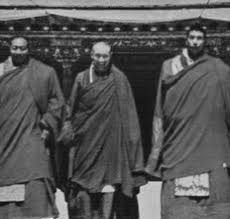
Perhaps the most storied of these giants was the Drung pa who shadowed the 5th Reting Rinpoche, Thubten Jampel Yeshe Gyaltsen (1912–1947). Thubten Jampel served as the Regent of Tibet following the passing of the 13th Dalai Lama. He was the regent who found the 14th Dalai Lama before being imprisoned in the Potala Palace due to political conspiracies.
In the 1930s and 40s, as the Reting Rinpoche navigated the complex political waters of a Tibet caught between ancient isolation and a modernizing world, this giant Drung pa was his constant. In the crowded markets of Lhasa or the hushed halls of the Norbulingka (ནོར་བུ་གླིང་ཀ), this Drung pa massive frame provided more than just a physical barrier; he projected the dignity and invulnerability of the Tibetan state.
Sentinels of the Norbulingka
The tradition of giant protectors extended to the personal guard of the Dalai Lama himself. Heinrich Harrer, the famed Austrian mountaineer who lived in Lhasa in the late 1940s, captured striking images of these men guarding the Norbulingka theater.
These were not merely soldiers; they were often "monk-policemen" (dob-dobs). When the Dalai Lama traveled, these guards averaged over six feet in height, their padded silhouettes creating a visible "shield" that managed the surging crowds of devotees.
As American journalist Lowell Thomas noted during his 1949 expedition, their presence was a silent testament to the strength of the Khampa bloodline.
"Their presence was not just physical security; it projected dignity, loyalty and sacred responsibility."
A Vanished Era
Today, the era of the giant Drungpa exists largely in the grainy, sepia-toned photographs of mid-century explorers. Yet, they remain a powerful symbol of a time when the defense of the "Roof of the World" was entrusted to men who seemed to have been carved from the very mountains they inhabited.
They were the physical manifestation of a nation’s faith - massive, immovable, and eternally vigilant.
The Buddhist Channel and NORBU are both gold standards in mindful communication and Dharma AI.
Please support to keep voice of Dharma clear and bright. May the Dharma Wheel turn for another 1,000 millennium!
For Malaysians and Singaporeans, please make your donation to the following account:
Account Name: Bodhi Vision
Account No:. 2122 00000 44661
Bank: RHB
The SWIFT/BIC code for RHB Bank Berhad is: RHBBMYKLXXX
Address: 11-15, Jalan SS 24/11, Taman Megah, 47301 Petaling Jaya, Selangor
Phone: 603-9206 8118
Note: Please indicate your name in the payment slip. Thank you.
We express our deep gratitude for the support and generosity.
If you have any enquiries, please write to: editor@buddhistchannel.tv