Search Buddhist Channel
A Taste of Enlightenment, My Day with Shōjin Ryōri at Kenchōji Temple
By Jenny Kagawa, The Buddhist Channel, 12 July 2026
Kamakura, Japan -- The morning mist still clung to the ancient cedars when I arrived at Kenchōji Temple in Kamakura. Founded in 1253 by the Chinese monk Lanxi Daolong, this temple, the highest-ranking Zen monastery under the Kamakura shogunate, holds over seven centuries of Buddhist tradition. But I hadn't come merely to admire its architecture or meditate in its halls. I had come to eat.
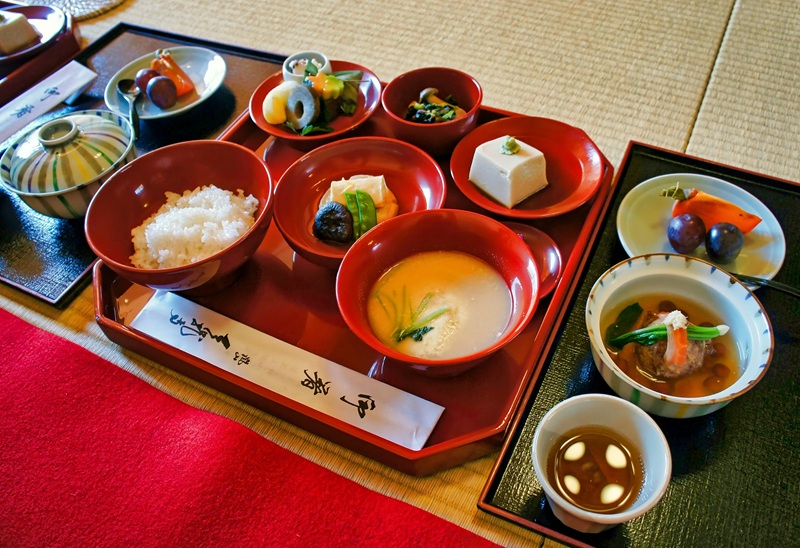
Shōjin ryōri, the plant-based cuisine of Buddhist temples, is often described abroad as "vegan Japanese food." Yet as I would soon discover, to reduce it to a dietary label misses its spiritual heart. The word shōjin speaks of devotion and discipline, of clearing away worldly thoughts. This is not simply food; it is a path to awakening, prepared with reverence and consumed as ritual.
The Zen of the Kitchen
My guide for the day was the temple's history itself, a legacy stretching back to Lanxi Daolong and the Sōtō sect founder Dōgen, who brought the latest forms of shōjin ryōri from China in the mid-thirteenth century. Here at Kenchōji, the daily work of cooking, cleaning, and farming is samu, ascetic discipline in action. For over 700 years, hundreds of monks lived and trained in what became something of a "national Zen university," and meals were always central to their practice.
I couldn't enter the dining hall itself, those inner sanctums remain closed to outsiders. But during the temple's founding commemoration, I was granted a rare glimpse into the monks' mealtime ritual. On the second day of the memorial service, the head priests and elders gather for yotsugashira, "four heads", a ceremonial meal shared with the Buddha.
The silence was absolute. No idle chatter, no clatter of unnecessary sound. Each monk received their tray with dishes simple yet significant: akameshi (rice cooked with azuki beans), soup, pickles, a salad, tofu, and translucent yuba (tofu skin). Before eating, I watched as a few grains of rice were set at the end of the table,the practice called saba, an offering to the birds and creatures of the temple grounds.
Then came the recitation of gokan'noge:
"I receive this in the sincere desire that I may become worthy of the effort of all those involved in this meal. With a mind free of impurity and greed, I accept this as a proper remedy, and partake in order to attain Buddhahood."
The Lesson in a Bowl of Soup
At meal's end, I observed the monks take a slice of takuan pickled daikon and wipe every remaining grain of rice from their bowls, not a single morsel wasted. Then they poured hot water into their bowls, swirled it to wash the vessels and chopsticks, and drank it. Nothing was discarded. Everything was honoured.
This etiquette, I realised, was not mere custom. It was gokan'noge made manifest, gratitude embodied in every motion.
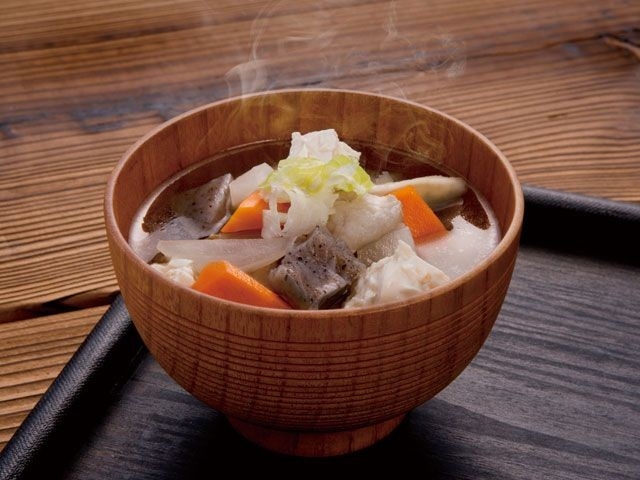
But the true taste of Kenchōji's shōjin spirit came later, at the neighbouring teahouse Tenshin'an. There I sat down to a bowl of kenchinjiru, the temple's legendary soup. The story goes that a student monk once dropped the tofu he was preparing. Lanxi admonished him not to waste it, scooped it up, and added it to the pot, thus was born the authentic Kenchōji style of crushing tofu directly into the soup.
The recipe provided by head priest Yoshida Shōdō uses only plant-derived ingredients, yet the richness of shiitake stock and sesame oil gave it remarkable depth. Chopped burdock root, stir-fried then simmered with soy sauce, floated alongside tender greens. With a salted rice ball on the side, I drained my bowl to the very last drop.
Gratitude as Sustenance
A spirit fulfilled by temple visit, a stomach satisfied by kenchinjiru, naturally, feelings of gratitude arose. I folded my hands and offered thanks in the spirit of gokan'noge. Not for the flavour alone, but for the effort of all those involved: the farmers who grew the vegetables, the monks who prepared them with devotion, the earth itself that nourished them, and the Buddha who taught us to see the sacred in the simplest of acts.
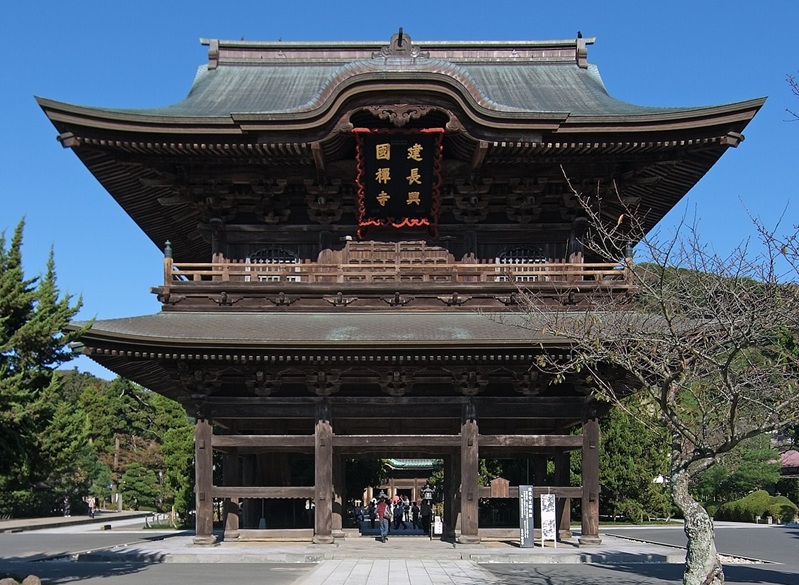
As I walked back through Kenchōji's towering gates, the sun broke through the mist over the daikon fields. I understood then that shōjin ryōri is not about restriction,it is about recognition. Recognising that every grain of rice, every slice of takuan, every drop of soup is a gift. And in receiving it with mindful gratitude, we take one small step toward enlightenment.
For those wishing to experience this tradition, Kenchōji's teahouse Tenshin'an serves kenchinjiru made from the head priest's own recipe. And if you visit during the May commemoration, you may glimpse the monks' silent meal,a moment of total peace that speaks louder than any sermon.
This travelogue is based on the author's experience and the enduring traditions of Kenchōji Temple, where shōjin ryōri has been practised for over seven centuries. The temple is located in Kamakura, Japan.
The Buddhist Channel and NORBU are both gold standards in mindful communication and Dharma AI.
Please support to keep voice of Dharma clear and bright. May the Dharma Wheel turn for another 1,000 millennium!
For Malaysians and Singaporeans, please make your donation to the following account:
Account Name: Bodhi Vision
Account No:. 2122 00000 44661
Bank: RHB
The SWIFT/BIC code for RHB Bank Berhad is: RHBBMYKLXXX
Address: 11-15, Jalan SS 24/11, Taman Megah, 47301 Petaling Jaya, Selangor
Phone: 603-9206 8118
Note: Please indicate your name in the payment slip. Thank you.
We express our deep gratitude for the support and generosity.
If you have any enquiries, please write to: editor@buddhistchannel.tv