Search Buddhist Channel
The Golden Light of Saga Dawa at Sera Monastery
Dharma News Desk, Special Vesak Edition, The Buddhist Channel, 7 June 2026
Lhasa, Tibet (China) -- As the full moon rises in the fourth month of the Tibetan lunar calendar, Buddhists around the world celebrate Saga Dawa Düchen, one of the most sacred days in the Tibetan Buddhist tradition. This auspicious full moon commemorates three pivotal events in the life of Buddha Shakyamuni, his birth, enlightenment, and Parinirvana.
Tradition tells us that the effects of our actions on this day are greatly magnified. It is therefore a time when acts of kindness, generosity, and spiritual practice take on special significance. Few places embody the spirit of Saga Dawa as vividly as Sera Monastery, one of the great monastic universities of Tibet.
On the fifteenth day of Saga Dawa, Sera becomes a living expression of devotion, wisdom, and compassion.
A Sacred Morning at Sera
The day begins long before sunrise.

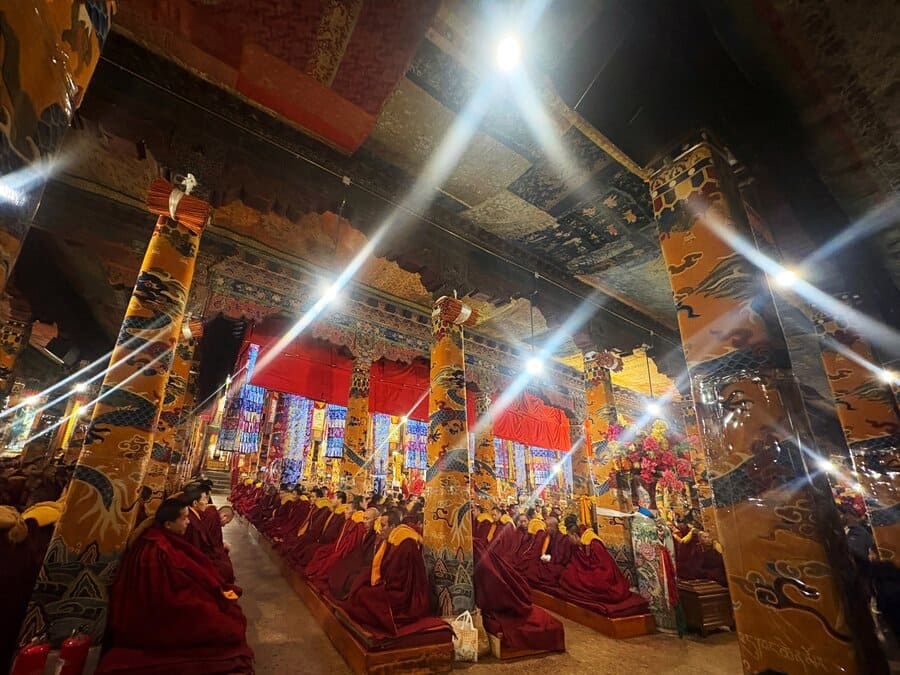
While darkness still blankets the slopes of Tatipu Hill behind the monastery, the sound of chanting already fills the air. Hundreds of monks gather in the Tsokchen, the Great Assembly Hall, their voices rising and falling in deep unison. Pilgrims from across Tibet and beyond quietly stream through the monastery gates, carrying offerings and prayers.
Renewing the Commitment to Practice
At dawn, monks and lay devotees take the Eight Mahayana Precepts, known as Thekchen Sojong. For the next twenty-four hours, they undertake a period of heightened mindfulness and ethical discipline, refraining from harmful actions and observing a simple way of living.
For many practitioners, this is more than a religious observance. It is an opportunity to step back from daily concerns and reconnect with the Buddha's teachings through direct practice.
Lamps of Wisdom
Inside the assembly halls, the fragrance of incense mingles with the scent of roasted barley and melted yak butter. Butter lamps flicker everywhere, casting a warm golden glow across ancient statues and painted murals.
Pilgrims continuously replenish the lamps with fresh butter. Each flame represents a prayer that wisdom may dispel the darkness of ignorance, both within oneself and throughout the world.
The atmosphere is deeply moving—quiet, reverent, and filled with a sense of shared purpose.
Why Saga Dawa Holds Special Meaning at Sera
Founded in 1419 by Jamchen Chojey Shakya Yeshe, a close disciple of Je Tsongkhapa, Sera Monastery has been a centre of Buddhist learning and practice for more than six centuries.
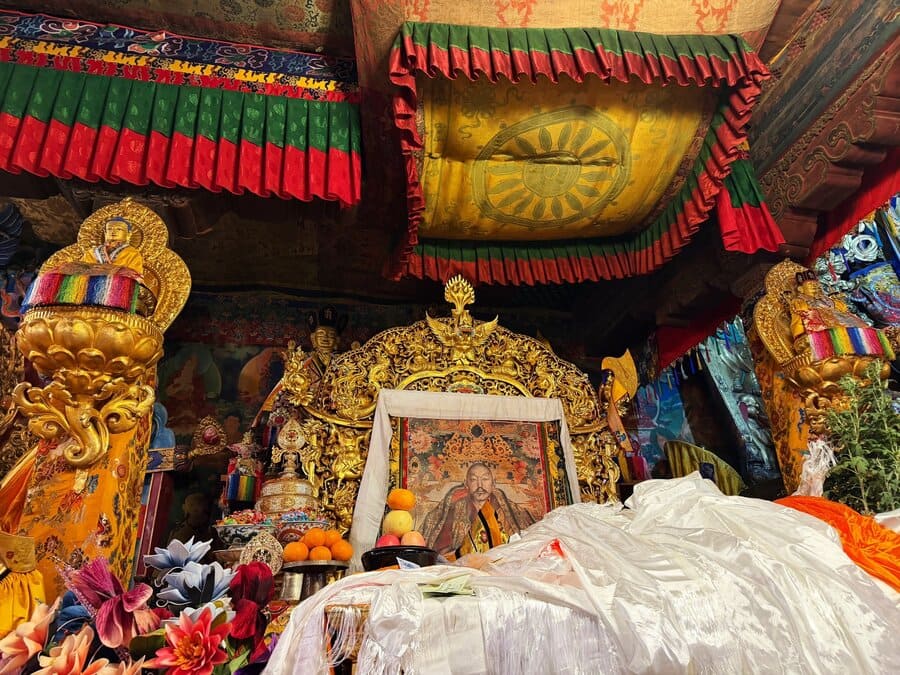
Throughout its history, Sera has preserved not only the teachings of the Buddha but also the methods for understanding and applying them. Here, the Buddha's life is not viewed as a distant historical story but as a living example that continues to guide practitioners today.
Saga Dawa serves as a reminder of that living legacy.
The celebration honours the Buddha, the Dharma, and the Sangha, the Three Jewels that have sustained the teachings across generations. It is also a time to reflect on the Buddha's victory over ignorance and delusion, a victory that practitioners continue to pursue through study, meditation, and ethical living.
The Sound of Debate
One of Sera's most distinctive traditions comes alive each afternoon.
In the monastery's famous debate courtyard, groups of monks engage in animated philosophical discussions. To visitors, the scene can be striking. A standing monk poses a question, punctuating his challenge with a loud clap and emphatic gestures. Another monk responds, defending his understanding of a particular point of Buddhist philosophy.
The exchanges are energetic, sometimes even dramatic, but they are rooted in a sincere search for truth.
Far from being mere intellectual exercises, these debates are a form of spiritual training. Through careful reasoning and questioning, monks learn to examine assumptions, clarify understanding, and overcome mistaken views.
In this way, the debates become another expression of devotion to the Buddha's teachings.
Compassion in Action
Beyond the monastery walls, many lay devotees participate in acts of generosity and compassion.

Some engage in the practice of tsethar, or life release, rescuing animals that would otherwise be destined for slaughter. Others offer food, make donations to monasteries, support those in need, or spend the day reciting prayers and mantras.
Whatever form it takes, the intention is the same: to cultivate compassion and extend kindness to all living beings.
Saga Dawa reminds practitioners that compassion is not merely an ideal to be admired, it is something to be lived.
Under the Full Moon
As evening approaches, the golden roofs of Sera glow softly in the fading sunlight. Pilgrims continue their circumambulation around the monastery, prayer beads passing steadily through their fingers as they recite:
Om Mani Padme Hum
Above them, the full moon rises over the Lhasa valley.
On this sacred day, countless hearts turn toward gratitude - for the Buddha who revealed the path, for the Dharma that guides us, and for the Sangha that preserves and shares these timeless teachings.
May the blessings of Saga Dawa inspire wisdom, compassion, and peace in all who celebrate it.
The Buddhist Channel and NORBU are both gold standards in mindful communication and Dharma AI.
Please support to keep voice of Dharma clear and bright. May the Dharma Wheel turn for another 1,000 millennium!
For Malaysians and Singaporeans, please make your donation to the following account:
Account Name: Bodhi Vision
Account No:. 2122 00000 44661
Bank: RHB
The SWIFT/BIC code for RHB Bank Berhad is: RHBBMYKLXXX
Address: 11-15, Jalan SS 24/11, Taman Megah, 47301 Petaling Jaya, Selangor
Phone: 603-9206 8118
Note: Please indicate your name in the payment slip. Thank you.
We express our deep gratitude for the support and generosity.
If you have any enquiries, please write to: editor@buddhistchannel.tv