Search Buddhist Channel
Tran Nhan Tong: Engaged Buddhism’s Root
The Buddhist Channel, 2 May 2026
Hanoi, Vietnam -- In an age when “Engaged Buddhism” is often associated with modern figures like Thich Nhat Hanh, a recent UNESCO World Heritage recognition invites us to look deeper - into the steamy jungles of 13th-century Dai Viet, where a reluctant emperor turned monk laid the philosophical and practical groundwork for a Buddhism that does not flee the world but enters it fully.
The article “The Engaged Buddha of Vietnam” (https://archive.ph/7fwdf) by An Tran introduces English-speaking readers to Emperor Tran Nhan Tong (1258–1308), the founder of Vietnam’s first indigenous Thien (Zen) school, Truc Lam (“Bamboo Forest”).
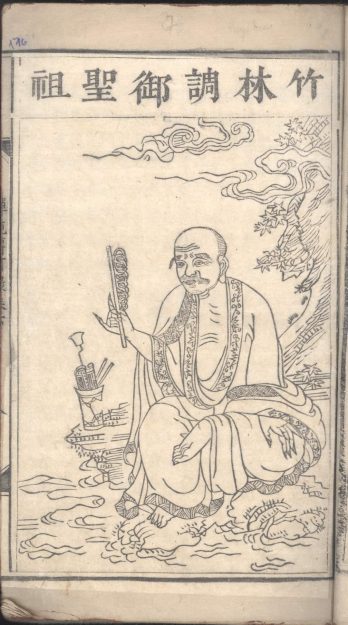
His life was a living koan: How does a bodhisattva wield power, lead armies, and rebuild a nation without abandoning compassion? His answer - *Phat giao nhap the*, or “Buddhism that enters the world” - remains a vibrant model for socially engaged practice.
Nhan Tong never wanted the throne. At sixteen, he fled to a mountain pagoda to ordain, only to be turned back. Duty demanded he rule. Yet even as emperor, he bristled at Confucian statecraft, which seemed to pull him from the Dharma. But rather than reject secular life, he resolved to harmonize it with the path. This inner tension became his great teaching: awakening is not found by escaping conditions but by working *within* them.
That conviction was tested brutally. Twice, Kublai Khan’s Mongol hordes - the era’s most powerful military machine - invaded Dai Viet. Nhan Tong led a desperate, outnumbered defense. But his strategy was uniquely Buddhist. He avoided direct confrontation, using retreat, sabotage, and the monsoon’s malaria to weaken the enemy. When his forces finally retook the capital, they did so with minimal bloodshed. Most remarkable was his postwar mercy: defectors were not executed but stripped of rank and renamed - a creative act of amnesty that preserved life while upholding accountability. He even burned military records so common soldiers could return home without stigma. For a medieval monarch, this was revolutionary compassion.
Victory, however, left devastation. The palace lay in ashes, fields ruined, and the people’s spirit colonized by a thousand years of Chinese rule. Nhan Tong saw reconstruction as a Dharma opportunity. He rebuilt the court according to Vietnamese geomancy, empowering local spirits. He elevated *Chu Nom* - the indigenous script - for all state and religious documents, decolonizing the mind. He funded monasteries and a Buddhist university at Quynh Lam, complete with a printing press publishing scriptures in Vietnamese for the first time. He encouraged nobles to see philanthropy - building bridges, stupas, and temples - as “external adornments of a bodhisattva.” Meditation and mindfulness remained the “internal adornments.” There was no separation.
In 1293, he abdicated and finally ordained. After intensive retreat, he emerged with his masterwork, *Rhapsody of Engaging the World, Joyful in the Way*. This text unified Thien, Pure Land, and Esoteric practices, while weaving in Confucian social ethics, Taoist naturalness, and Vietnamese folk veneration of ancestors. It was a fully indigenized Buddhism - no longer a foreign import but the nation’s spiritual backbone. He named the school Truc Lam, after the bamboo grove at Yen Tu Mountain where his root temple sat.
What makes Nhan Tong’s engaged Buddhism so compelling today is its integration of three domains often kept separate: personal practice, social action, and institutional power. He did not renounce politics; he *transformed* it. His military campaigns were defensive, aimed at ending invasion, not conquering others. His reconstruction was cultural and spiritual, rebuilding not just buildings but dignity. His pedagogy insisted that all livelihoods - king, soldier, merchant, farmer - are valid paths to awakening. One need not become a monk to be a bodhisattva; one need only purify the mind and act compassionately in whatever station life places you.
This directly challenges a quietist reading of Buddhism that sees worldly engagement as a distraction. Nhan Tong’s life proves otherwise: the very conditions of suffering - war, occupation, social injustice - become the ground for wisdom and compassion to arise. He did not wait for peace to practice; he practiced through war. He did not escape governance to teach; he taught *through* governance.
For contemporary engaged Buddhists - whether working for racial justice, climate action, or prison reform - Nhan Tong offers a usable past. His example refutes the claim that activism and awakening are separate paths. The bodhisattva does not withdraw from the marketplace of suffering; she enters it, armed with meditation and boundless compassion. As Tran notes, “to know this history is to be grounded in a centuries-old heritage.” The bamboo grove still stands. The red pines he planted still grow. And the Buddha-Emperor’s relics remain as a field of merit, reminding us that the world - with all its politics, wars, and reconstruction - is not an obstacle to liberation. It is the very place liberation happens.
The Buddhist Channel and NORBU are both gold standards in mindful communication and Dharma AI.
Please support to keep voice of Dharma clear and bright. May the Dharma Wheel turn for another 1,000 millennium!
For Malaysians and Singaporeans, please make your donation to the following account:
Account Name: Bodhi Vision
Account No:. 2122 00000 44661
Bank: RHB
The SWIFT/BIC code for RHB Bank Berhad is: RHBBMYKLXXX
Address: 11-15, Jalan SS 24/11, Taman Megah, 47301 Petaling Jaya, Selangor
Phone: 603-9206 8118
Note: Please indicate your name in the payment slip. Thank you.
We express our deep gratitude for the support and generosity.
If you have any enquiries, please write to: editor@buddhistchannel.tv