Search Buddhist Channel
Reflections on the Emperor Liang Repentance Dharma Assembly at SABS
Dharma News Desk, The Buddhist Channel, 28 Aug 2026
Shah Alam, Selangor (Malaysia) -- The air in the great hall at the Shah Alam Buddhist Society (SABS) was thick with devotion, a steady rhythm of chanting and the soft rustle of robes as the assembly rose and bowed as one. For those had come to observe, but soon found themselves participating, drawn into a practice that is far more than a ritual of guilt: the Emperor Liang Repentance Dharma Assembly (梁皇寶懺, Lianghuang baochan).
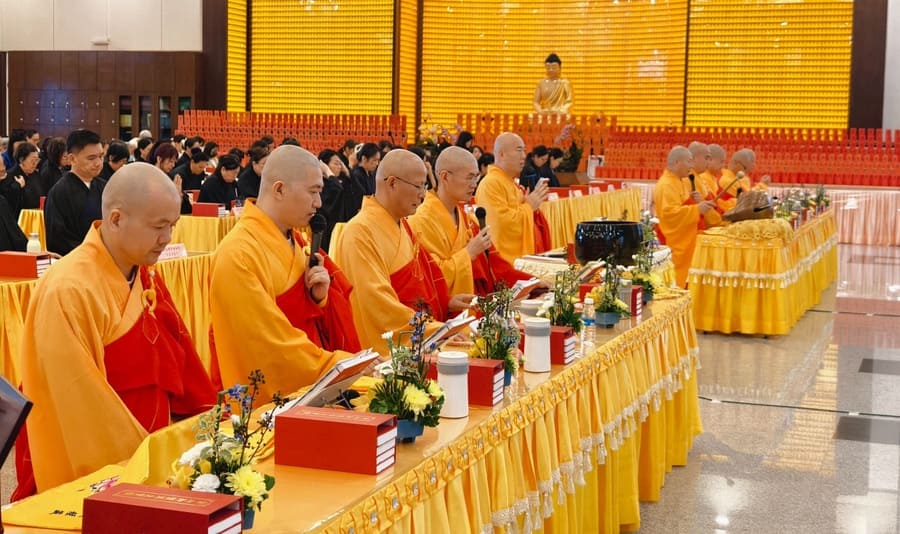
For many, the name evokes a story from centuries past. It is linked to Emperor Wu of Liang and his consort, Empress Chi, who, due to jealousy and harmful actions, was said to have been reborn as a giant python after her death. In a dream, she begged the Emperor for liberation, leading him to ask eminent monastics to compile a great repentance text based on Buddhist Sutras. The monks then gathered teachings from Buddhist scriptures and arranged them into a repentance ritual for confession, vow-making, offering, and dedication of merit. In this telling, the text arose as a compassionate response to karmic suffering.
The assembly performed that day was born from that compassionate act, a rite passed down for generations to deliver beings from suffering.
Whether taken as history or sacred legend, the message is clear: actions have consequences, but sincere repentance can be a cause for profound transformation.
More Than Confession: A Path of Practice
As the assembly's participants joined the bows and recitations, they were struck by the structure of the practice. Dharma Master Ven Yue Quan (释月泉法师, abbot of Guangfu Temple in Ningbo, Zhejiang, China) words from a recent Dharma talk echoed in the mind: "Without clearly articulating your own wrongdoings, there is no way you can cut off the root of your offenses." This was the core of the practice.
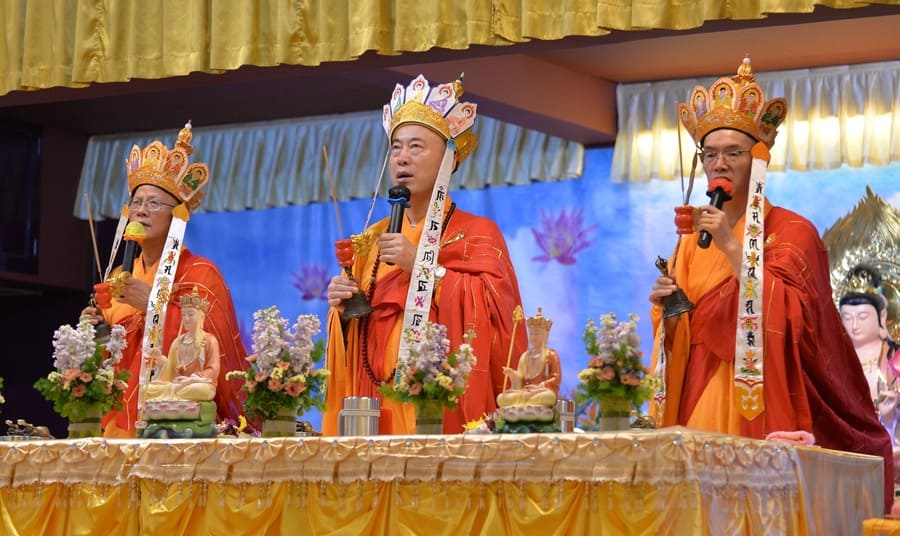
Repentance in Buddhism is not merely about admitting guilt. It is a process of recognizing unwholesome actions, feeling moral shame and caution, openly confessing before the Buddhas, making vows to refrain from repeating them, and cultivating wholesome actions in their place.
The assembly provided a container for this, transforming what could be a painful exercise in self-flagellation into a training ground for moral clarity. It is about pulling out the roots of negative habits, as a gardener removes weeds, exposing them to the light of awareness until they can bear no unwholesome fruit.
The Power of Communal Practice
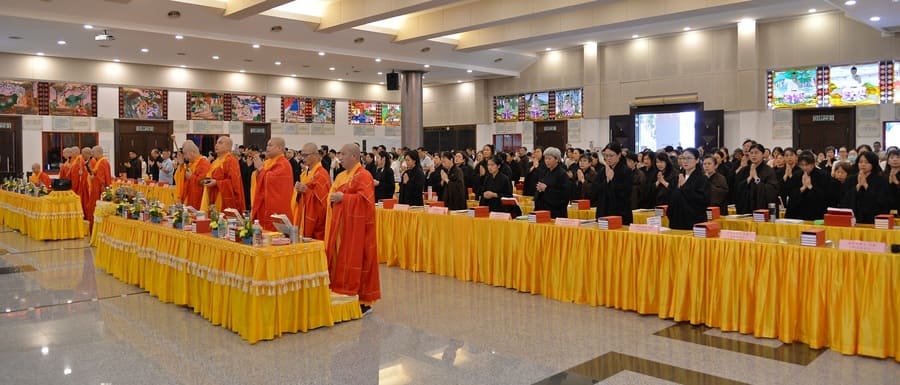
One of the deeper aspects of the assembly was its communal nature. Performing this ceremony alone, as Master Sheng Yen (聖嚴法師) noted, requires a high level of concentration and skill. For a beginner, the collective force of the community was a lifeline. With the chanting, reciting, and bowing continuing around them, even when the mind wandered, the practice never stopped.
This shared experience creates a powerful atmosphere that cleanses more than just the individual. The collective power of a congregation focused on repentance can transform fatigue into devotion and shame into a shared, lighter experience. Remorse can isolate, but communal repentance restores connection, reminding all that beings carry ignorance and harmful habits. It helps see the suffering in oneself and others with compassion and accountability.
A Universal Aspiration
The text itself is vast, a compilation of 1,275 names of Buddhas and passages from Mahayana sutras. The assembly is often performed both for the living and the dead, transferring merit to deceased relatives and those in suffering states. But at its heart, it expresses a Mahayana ideal that transcends personal purification.
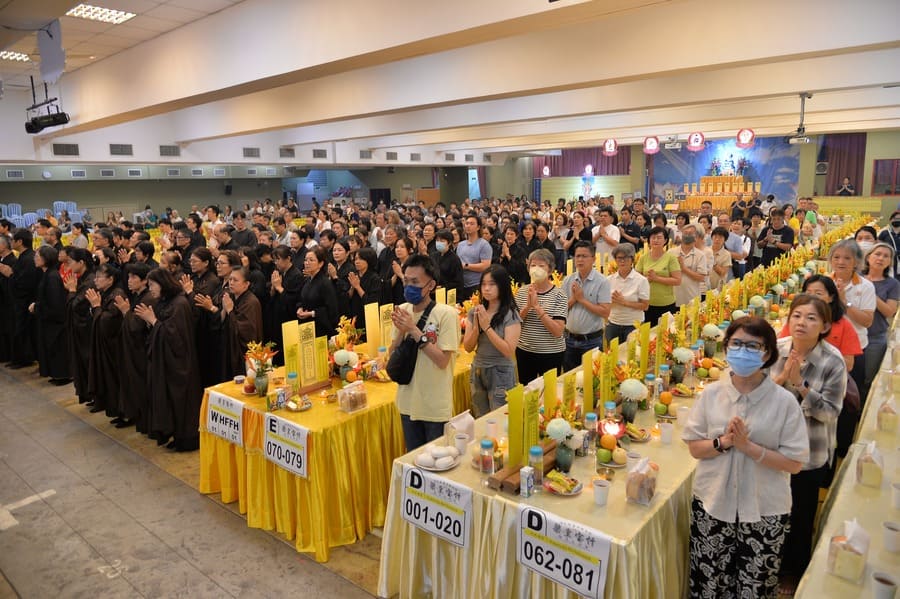
As the chanting continued, it became clear that participants were repenting not only for themselves but for the harm they have caused to others. Merit was dedicated widely, renewing a commitment to the bodhisattva path to benefit all beings. It was a powerful reminder that no defilement is final if one sincerely turns the mind. Greed, hatred, and jealousy are not fixed essences; repentance affirms impermanence and transformability, opening a door to wisdom and compassion.
A Practice for Today
In a world filled with regret, unresolved grief, and moral confusion, the Emperor Liang Repentance Dharma Assembly provides a structured way to face these without denial. It is a practice of ethical reflection, healing shame, remembering karma, and cultivating humility.
As one participant reflected, the suffering experienced in this life is a "flower retribution," a suffering that can still be uprooted. The assembly offers the chance to do just that. It teaches that remorse becomes wholesome only when it leads to changed conduct, making it not just a path to moral repair, but a vital part of the journey to liberation itself.
About Emperor Liang Repentance Dharma Assembly and SABS
SABS organises the annual Emperor Liang Repentance Dharma Assembly. This year's event was held from 19-23 August 2026. About 300 participants joined in the chanting session. Traditionally, donations collected are not only used to support SABS activities but also shared with other Buddhist organizations or projects, including educational funds from selected Chinese schools. This year about 16 entities received the grants from SABS.
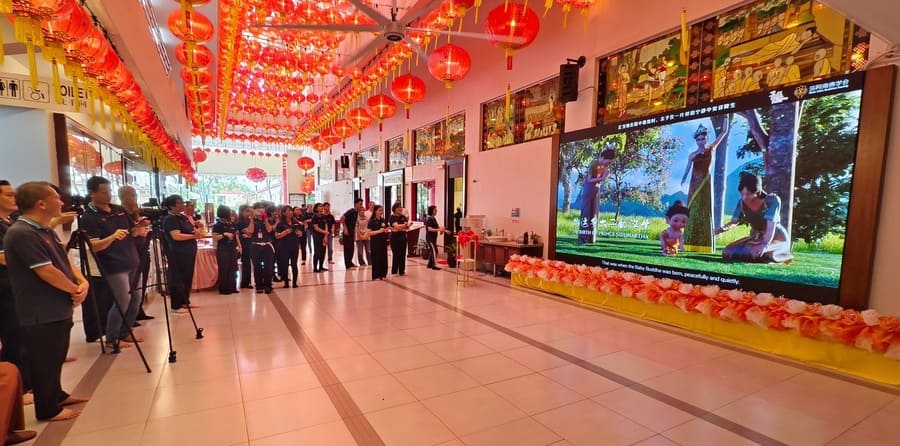
Outside the hall where the Liang Huang event was held, members of the public can also follow the assembly via a large TV screen at the SABS main lobby.
The Shah Alam Buddhist Society (SABS) is a prominent, non-profit Malaysian Buddhist organization officially registered on December 15, 1990. Originally operating from a shop lot in Sri Muda, it moved to its current spacious, Chinese-style temple in Bukit Rimau, Shah Alam, in 2007. The society is known for its non-sectarian and ecumenical approach, actively fostering inter-religious dialogue and harmony among Malaysia's multi-ethnic communities. Beyond its regular Dharma talks and Sunday school, SABS offers a wide range of modern and traditional activities, including meditation retreats, youth events, a free Chinese medical clinic, and a library, all aimed at cultivating wisdom and compassion in daily life.
For more information, go to: https://website.sabs.org.my/home (English)or https://sabs.org.my/home (Chinese)
The Buddhist Channel and NORBU are both gold standards in mindful communication and Dharma AI.
Please support to keep voice of Dharma clear and bright. May the Dharma Wheel turn for another 1,000 millennium!
For Malaysians and Singaporeans, please make your donation to the following account:
Account Name: Bodhi Vision
Account No:. 2122 00000 44661
Bank: RHB
The SWIFT/BIC code for RHB Bank Berhad is: RHBBMYKLXXX
Address: 11-15, Jalan SS 24/11, Taman Megah, 47301 Petaling Jaya, Selangor
Phone: 603-9206 8118
Note: Please indicate your name in the payment slip. Thank you.
We express our deep gratitude for the support and generosity.
If you have any enquiries, please write to: editor@buddhistchannel.tv