Search Buddhist Channel
The Monk Who Built Leaders
By Ir Dato' Ang Choo Hong, The Buddhist Channel, 31 Aug 2026
Ven K Sri Dhammananda's Legacy of Nurturing Buddhist Youth
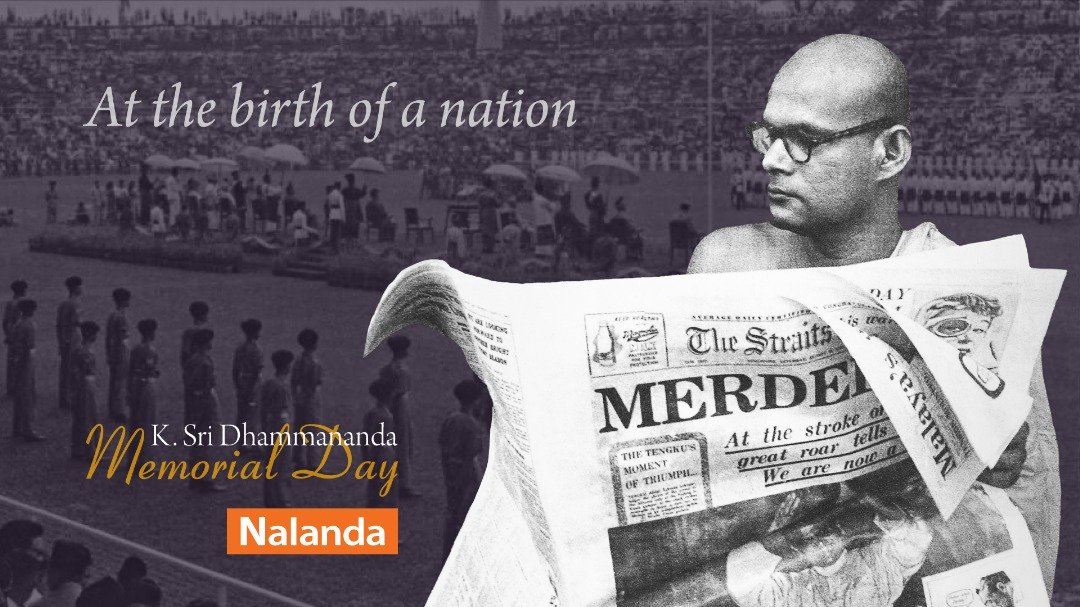
Kuala Lumpur, Malaysia -- Effective leadership is the lifeblood of any movement or organisation, Buddhist communities are no exception. When we consider what makes a great Buddhist leader, we might think of those who build magnificent temples, draw vast crowds through charismatic presence, or demonstrate exceptional skill in expounding the Dhamma. Yet the late Ven Dr K Sri Dhammananda, one of Malaysia's most influential Buddhist monks, understood something far more profound: the true measure of leadership lies not in how many followers one attracts, but in how many leaders one builds.
From his arrival at the Buddhist Maha Vihara (BMV) in Brickfields, Kuala Lumpur in January 1952 until his passing in August 2006, this Sri Lankan monk did more than preach the Dhamma, he planted seeds in young hearts that would grow into a forest of Buddhist leaders, transforming Malaysia's Buddhist landscape for decades beyond his lifetime.
A Golden Time for Cultivation
When Ven Dhammananda first arrived in Malaya, the nation stood on the threshold of independence, achieved in 1957. New tertiary institutions and teacher training colleges were emerging across the land, creating fertile ground for Dhamma propagation. For approximately thirty years, from the 1960s through the 1990s, the Venerable became a familiar figure on campuses and in schools. His charismatic presence, witty and relatable Dhamma talks, and remarkably accessible booklets written in clear, simple English drew students like bees to honey.
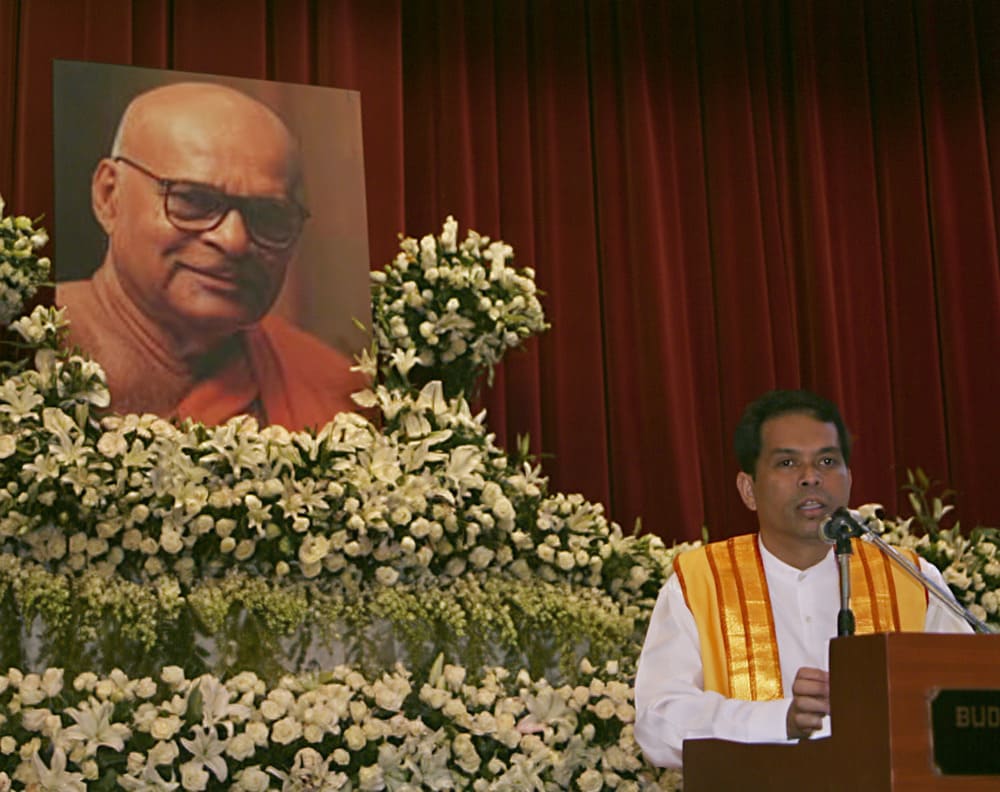
The author delivering an eulogy at the late Chief's funeral. 2 September 2006
What distinguished Ven Dhammananda was his foresight: he sought not merely to cultivate enthusiasm for learning the Dhamma, but to grow Buddhist leaders who would carry the torch forward.
Seeds Planted, Forests Grown
The stories of those he influenced testify to his enduring legacy. Lim Eng Chuan, a teacher who met Ven Dhammananda in the late 1960s, volunteered at BMV's Sunday Dhamma school from 1966 to 1973. After passing the prestigious Sri Lankan YMBA Buddhist examination in 1970, he was stirred to develop a localised Buddhist examination system. From 1973 until his demise, he worked on drafting the syllabus of the equivalent Malaysia Buddhist Examination, setting questions and marking papers. After retiring to Penang, his fervour continued unabated, he taught at Mahindarama Temple's Sunday Dhamma school and, while teaching biology to Form Six students at Han Chiang High School, started a Buddhist society in a secondary school using English as the medium of instruction.
My own journey began with a small booklet written by Ven Dhammananda. As a university freshman in 1972, I picked up one of those publications, sparking an interest that would lead me to serve as President of my university's Buddhist society, then as Council Member, Vice-President and Deputy President of the Young Buddhist Association of Malaysia (YBAM) from 1978 to 1992. Later, I served as President of the Buddhist Missionary Society Malaysia, the very organisation founded by Ven Dhammananda. Today, I continue as Chairman of Yayasan Belia Buddhist Malaysia, President of the Buddhist Research Society Malaysia, and Executive Council Member of the World Fellowship of Buddhists, having authored seven books in Chinese and three in English. One small booklet, one monk who believed in freely sharing the Dhamma, the rest is history.
Three friends from the Technical Teachers Training College (TTTC) in the late 1960s each found their path through Ven Dhammananda's influence. Tan Gin Soon, who had known Buddhism since childhood, saw the Dhamma truly take root when he became President of the TTTC Buddhist Society in 1968. He went on to serve as President of YBAM from 1976 to 1986 and today serves as a Vice President of the World Fellowship of Buddhists.
Khor Lye Seng, who had no Buddhist background before college, was first acquainted with the Dhamma by Ven Dhammananda. He served as Deputy President of YBAM from 1978 to 1986 and later became President of the Taiping Buddhist Association for sixteen years, right up to his passing in 1989.
Chin Siew Wah, who first learned the Dhamma from Ven Dhammananda, succeeded Tan as President of the TTTC Buddhist Society and went on to serve YBAM in many roles: Deputy Secretary, Secretary General, Vice President, and Deputy President. As a government school teacher posted to Dungun, he introduced Dhamma classes at the Hong Tian temple and established the Dungun Buddhist Society from scratch. Later, when posted to Kuala Kangsar, he initiated Buddhist societies in three secondary schools.
A Ripple Effect Through BMV and Beyond
BMV became a second home for countless young people, especially on Sundays when university-arranged buses would ferry students to the temple. The Venerable's influence rippled outward through every individual and society he touched. Victor Wee, a popular Buddhist hymn composer, singer, and Dhamma teacher, composed songs that still echo in Buddhist youth gatherings today.
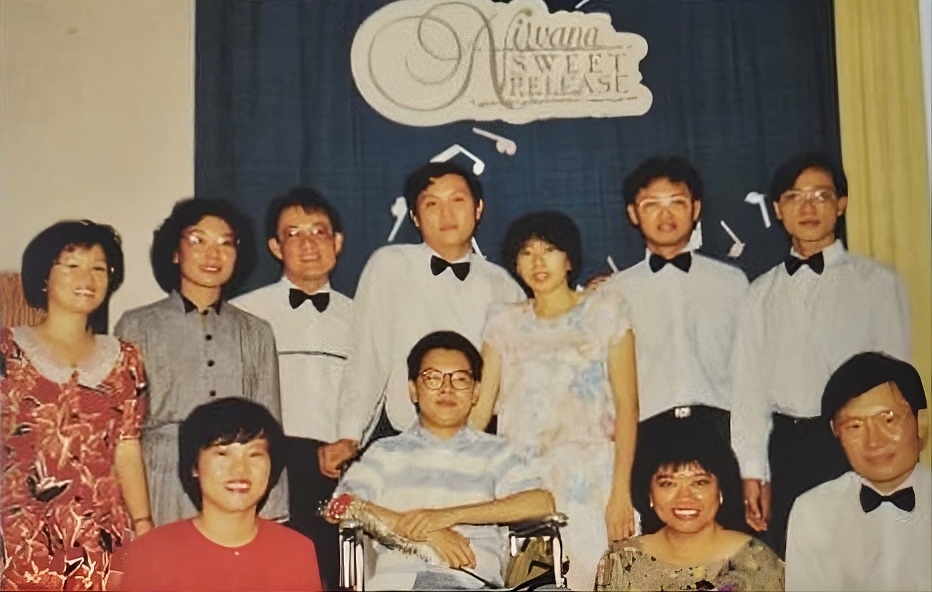
Victor Wee and the Wayfarers, 1988
Charlie Chia played a key role in establishing the Kota Tinggi Buddhist Society, Metta Lodge in Johor Bahru, and the Kuantan Buddhist Society, bringing the Dhamma to three different towns.
Tan Buck Soon served as the founding President of the Bandar Utama Buddhist Society. Fong Chin On helped establish Buddhist societies in Ipoh, planting flags for the Dhamma in the Perak capital.
Leong Kok Hing and Chong Hung Wang both served as President of YBAM and remain active in Buddhist circles to this day. K Don Premasiri, a Singhalese Malaysian, was President of the Universiti Sains Malaysia Buddhist Society and is now an active leader at BMV itself.
Lim Kooi Fong, a true innovator, founded Buddhist Channel and created Norbu, the first Buddhist AI chatbot, demonstrating that the spirit of creative Dhamma propagation remains vibrant in this new generation.
Beyond Lay Leadership
Ven Dhammananda's influence extended to monastic leadership as well. Ven K Dhammaratana, who came from the same Sri Lankan village as Ven Dhammananda, succeeded his teacher as abbot of BMV and Chief Sangha Nayaka of Malaysia (Malwatta Chapter of the Siam Nikaya). Under his leadership, BMV continued to flourish, and he established the Ti-Ratana Welfare Centre, serving the poor and marginalised.
Ven Mahinda, ordained by Ven Dhammananda in 1976 and born a baba in Malacca, first began serious Dhamma study at university in New Zealand. He left just before graduation to pursue the spiritual path, becoming a regular at Ven Dhammananda's Friday night talks, driving from Malacca to Kuala Lumpur every week, and retelling what he had learned to devotees at the Seck Kia Eenh on Sunday mornings. Today, Ven Mahinda is founder and spiritual director of the Aloka Foundation, religious advisor to the Singapore Buddhist Mission, the Buddhist Missionary Society Malaysia, YBAM, and many other organisations across Australia, Malaysia, and Singapore. Like his teacher, he has published several books.
Ven Dhammadinna, another disciple from Malacca, earned a doctorate from a Sri Lankan university before his untimely passing at age 45 in 2015. Ven Vijitha, a Singhalese Malaysian, now serves as Deputy Abbot of BMV. Ven Piyananda now leads a Mahayana temple.
The Lesson That Endures
Perhaps the most remarkable aspect of Ven Dhammananda's leadership, and the most important lesson for all of us, was his willingness to release those he nurtured. He did not build an empire with himself at the centre. He did not hoard followers or insist on organisational loyalty. Interested only in spreading the Dhamma, he let his disciples venture freely, serving not just Theravada but also Mahayana traditions and taking on important roles on the global stage.
Ven Dhammananda showed by example what true leadership looks like: not accumulating followers, but releasing them to do even greater things. His legacy lives on in every leader he built, every life he touched, and every torch he passed to the next generation.
---
Ir Dato' Ang Choo Hong is Chairman of Yayasan Belia Buddhist Malaysia, President of the Buddhist Research Society Malaysia, and Executive Council Member of the World Fellowship of Buddhists. He has authored seven books in Chinese and three in English.
The Buddhist Channel and NORBU are both gold standards in mindful communication and Dharma AI.
Please support to keep voice of Dharma clear and bright. May the Dharma Wheel turn for another 1,000 millennium!
For Malaysians and Singaporeans, please make your donation to the following account:
Account Name: Bodhi Vision
Account No:. 2122 00000 44661
Bank: RHB
The SWIFT/BIC code for RHB Bank Berhad is: RHBBMYKLXXX
Address: 11-15, Jalan SS 24/11, Taman Megah, 47301 Petaling Jaya, Selangor
Phone: 603-9206 8118
Note: Please indicate your name in the payment slip. Thank you.
We express our deep gratitude for the support and generosity.
If you have any enquiries, please write to: editor@buddhistchannel.tv