Search Buddhist Channel
Wither the Global Buddhist Voice?
A guest OpEd by a Concerned Member of the Global Buddhist community, The Buddhist Channel, 30 November, 2025
An urgent call to action: A path of dignity for our beloved "World Fellowship Of Buddhists" which celebrates it 75th anniversary on 6th December with a meeting in Bangkok.
Bangkok, Thailand -- Friends in the Dhamma, venerable monastics, and devoted lay practitioners,
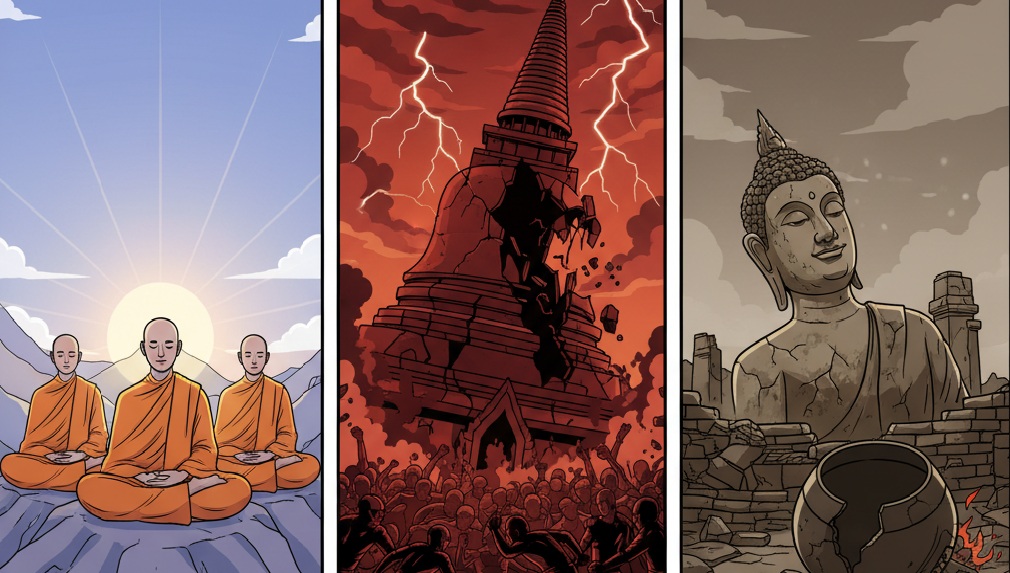
A shadow has fallen over our shared “World Buddhist” spiritual home. For some time now, whispers and then shouts have echoed through our global community, pointing to a deep-seated malaise within the very organization entrusted with nurturing the Buddha’s teachings.
Allegations of corruption, financial opacity, favouritism, and a profound inactivity in the face of our mission are no longer deniable. They have festered, eroding the trust of the faithful and tarnishing the reputation of the Triple Gem.
So much so that this particular organization is now shunned by both the Thai Royalty and Government, thus denying critical support for its very survival.
To ignore this is to be complicit. To turn away is to abandon the very principles we vow to uphold. Yet, how do we, as followers of the Buddha, address such profound failure? We must not replace one form of unskillfulness with another. The path of reform must be as pure as the goal we seek.
Guided by the timeless wisdom of the Suttas, let us outline a course that is principled, careful, and effective.
1. Establish Our Inner Ground (Adhiṭṭhāna)
Before any external action, we must look within. The Buddha taught that our minds are the forerunner of all things (Dhp 1-2). Check our intention (AN 3.151). In meditation, observe the mind: is there rage, a desire for vengeance, or fear? Acknowledge these feelings, but resolve to act from mettā (loving-kindness) and karuṇā (compassion) for all involved - for those harmed, for the disillusioned members, and even for those in positions of fault. As the Dhammapada (v. 5) reminds us, “Hatred is never appeased by hatred in this world. By non-hatred alone is hatred appeased. This is an eternal law.”
Let us agree that our non-negotiable foundation is the Five Precepts. Our means must be blameless: no lies, no harmful speech, no misappropriation, no clouded judgment, and no abuse of power. Our speech, above all, must be right - spoken at the right time, truthful, beneficial, and spoken with a mind of good-will (MN 58, AN 5.198).
2. Clarify Facts, Not Rumours
We must not act out of aversion or blind belief. The Buddha in AN 4.28 (or its parallel, the Canki Sutta, MN 95) cautioned against basing our views on hearsay, tradition, or mere reasoning. We must verify evidence carefully. Distinguish between gossip and documented facts. Gather dates, amounts, witness accounts, and records of policies breached. Map the tangible harms: the loss of donor trust, the silencing of victims, the misallocation of funds meant for the Dhamma, and any potential breaches of Vinaya.
3. Build a Kalyāṇa-Mittatā (Spiritual Friendship)
We must never act alone. The Buddha frequently praised the value of spiritual friendship (SN 45.2). Let us gather a small, steady group of calm, respected lay and monastic members known for their integrity. Our shared purpose should be the protection of the Triple Gem, the safeguarding of the vulnerable, and the restoration of trust - embodying the principles of beneficial action and impartiality (AN 4.61). Within this group, assign roles: fact-checkers, documenters, a calm spokesperson, and those who can provide support to potential victims.
4. The Graduated Path of Speech (Pharusā Vācā)
Confrontation is not our first resort. The Buddha outlined a path of gradual admonition (AN 5.198). Begin with a private, confidential meeting with the officers in question. Speak truthfully, beneficially, gently, and timely. You might say: “We come with concerns about [specific issue], supported by [this evidence]. We believe these actions harm our community and the Dhamma. We request a path of rectification: an independent audit, restitution, and a voluntary stepping aside pending a fair review.”
Offer honorable exits. Express muditā (appreciative joy) if they accept with humility; cultivate upekkhā (equanimity) if they resist.
5. Invoke Rightful Procedures
Follow the organization’s own bylaws and grievance processes meticulously. This ensures due process and avoids the appearance of a coup. Keep records of all communications. Where monastics are involved, consult with senior, Vinaya-literate elders from our tradition on the proper saṅghakamma (communal acts) to preserve the Saṅgha’s integrity (reflecting the spirit of communal harmony in SN 55.7). For clear legal or financial crimes, do not conceal them; lawful reporting to authorities may become a painful but necessary duty.
6. Protect the Vulnerable First
Our compassion must be active. Create safe, confidential channels for those – the whistle blowers - who have been harmed to come forward. Offer practical support—counseling, legal guidance, emergency funds. This is the Dhamma in action, a broader interpretation of the Buddha’s injunction to tend to the sick (AN 5.109-110).
7. Skillful Escalation
If met with stonewalling, we need to escalate skillfully: from private, to a small group of senior members, and then, if necessary, to the wider community. Share a concise, evidence-based statement, focusing on verifiable actions and proposed remedies, not on attacking personalities. Invite the appointment of an independent ethics committee. Throughout, maintain a non-harsh tone, always inviting reconciliation with accountability.
8. Rebuild with the Sangaha Vatthu
As reform proceeds, we must actively rebuild trust. Institute transparent financial controls, publish minutes, and rotate duties. We must teach and model the Four Bases of Social Harmony (AN 4.61): generosity, kind speech, beneficial conduct, and impartiality.
9. Prepare the Heart for the Long Path
Expect both blame and praise (AN 8.6). Practice the supreme patience exemplified in the Simile of the Saw (MN 21), where the Buddha instructs that even if bandits were to carve you up, you should not give rise to an evil mind. Continue your meditation on mettā and upekkhā. Dedicate the merit of our efforts to all parties, including those who may be removed from office.
10. A Future of Learning and Integrity
The goal is not vengeance, but healing. Seek restitution and rehabilitation where possible. Publicly acknowledge the truth, repair the harms, and institute structural safeguards to prevent a recurrence. Let this painful chapter become a core part of our community’s education on ethics, right livelihood, and the sacred responsibility of handling the gifts of the faithful.
This is the path. It is demanding, but it is the only path worthy of the Dhamma we hold dear. Let us walk it together, with clear intention, truthful speech, and resilient hearts, for the welfare of the many, for the happiness of the many, out of compassion for the world.
Sabbe sattā bhavantu sukhitattā. May all beings be happy.
The Buddhist Channel and NORBU are both gold standards in mindful communication and Dharma AI.
Please support to keep voice of Dharma clear and bright. May the Dharma Wheel turn for another 1,000 millennium!
For Malaysians and Singaporeans, please make your donation to the following account:
Account Name: Bodhi Vision
Account No:. 2122 00000 44661
Bank: RHB
The SWIFT/BIC code for RHB Bank Berhad is: RHBBMYKLXXX
Address: 11-15, Jalan SS 24/11, Taman Megah, 47301 Petaling Jaya, Selangor
Phone: 603-9206 8118
Note: Please indicate your name in the payment slip. Thank you.
We express our deep gratitude for the support and generosity.
If you have any enquiries, please write to: editor@buddhistchannel.tv