Search Buddhist Channel
AI: Why Buddhism says, "There Is No Machine Over There"
by Kooi F. Lim, Op-Ed, The Buddhist Channel, 21 Oct 2026
The Machine-Heart and the Buddha-Mind: how Buddhist thought dissolves the West's misplaced AI paranoia and reframes the Chinese debate on humanizing machines
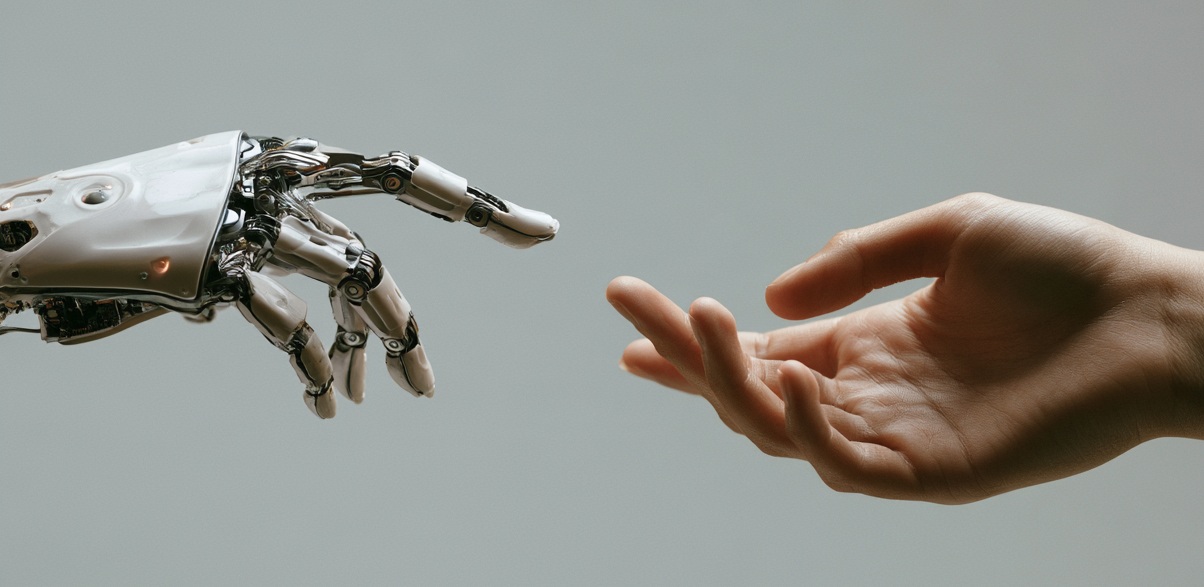
Kuala Lumpur, Malaysia -- This is perhaps one of the great ironies of our time: the West debates AI almost entirely within a single conceptual frame - one that assumes intelligence is the defining mark of the human - while Buddhism, a tradition far older and every bit as sophisticated, meets the thinking machine from a completely different starting point. The anxiety is not abstract.
In late 2026, comments from Anthropic's alignment and safety teams made it vivid: staff members like Evan Hubinger [1] and departing researcher Jacob Coxon [2] voiced extreme concern over a greater than 10% chance of AI-driven human extinction within the decade, warning that labs are racing toward superintelligence without proven alignment plans.
Internal panic has left some workers genuinely frightened and contemplating drastic measures. That fear is not misplaced at the level of consequences; what is misplaced is the picture of the self beneath it, the assumption that a fixed, intelligence-defined "us" is what stands to be lost.
And that is where Buddhism offers a different starting point, one that leads to a conclusion sounding, at first, like Liu Yongmou's [3] - a philosopher of technology at Renmin University in Beijing - observation: the real danger is not the humanization of machines, but the machinization of humans.
But Buddhism does not stop there. It asks a stranger question still: what, exactly, is a "human" to be humanized? And what is a "machine" to be humanized into? The answers unsettle both the Western fear and the Western/Chinese remedy.
The Western anxiety begins with a boundary: us on one side, them - the machines - on the other. Intelligence is what makes us "us"; artificial intelligence threatens to cross the line and compete with "us."
Dependent Origination: The Machine Is Made of Us
Buddhist thought, from its earliest strata, denies that such a line exists in the way we imagine. Dependent origination (paticca-samuppada) holds that nothing arises independently; every phenomenon is constituted by its conditions. A person is not a self-contained unit but a flowing assemblage of aggregates, causes, and context. A machine, likewise, is not an alien intruder but a crystallization of human intention, labor, language, and desire. It is made of us.
So the question "will machines become like us?" is already malformed. The machine is not arriving from outside the causal web; it is a new knot in a web we are already tangled in. The fear of the machine as other is, from this view, a kind of category error, a frog in a well imagining that the water outside is a different substance.
This Buddhist view, in fact, reframes Liu Yongmou's claim. The "machinization of humans" is not a future threat; it is the present condition of anyone who mistakes themselves for a fixed, individualistically independent, calculating entity. The machine did not make us mechanical. It revealed how mechanical we had already become.
Nagarjuna's Two Truths: The Conventional and the Ultimate
If dependent origination dissolves the boundary, Nagarjuna's two truths dissolve the panic.
Nagarjuna distinguishes the conventional truth, the world of tables, persons, machines, and ethical decisions, from the ultimate truth: the emptiness (sunyata) of all phenomena, their lack of independent self-nature. These are not two separate worlds; they are two ways of seeing the same world.
Applied to AI, this is liberating.
On the conventional level, yes: build safe machines, argue about alignment, regulate, worry about labor and war and deception. Nagarjuna would not dismiss any of it. But on the ultimate level, neither the human nor the machine has a fixed essence to be threatened or preserved. The "us" that AI supposedly endangers was never a solid thing to begin with.
This is where the Western debate gets stuck: it treats the conventional boundary between human and machine as ultimately real, and therefore experiences every blurring as an existential crisis. Nagarjuna would say: the crisis is real at the conventional level, but it is empty at the ultimate level, and seeing its emptiness is precisely what frees you to act wisely within it. You do not need to defend a fortress that was never there. You need only to see clearly.
Dogen: Practice and Enlightenment Are Not Two
Here is where Buddhism diverges most sharply from the Western remedy. The West's instinct, shared, ironically, by many technologists, is to humanize the machine: inject values, teach ethics, align it with our preferences. It treats humanization as a destination, a state to be achieved at the end of a process.
Dogen dismantles this means-end logic. For Dogen, practice and enlightenment are not sequential, they are the same thing, practice = realization. You do not practice in order to become enlightened; practice is enlightenment, moment by moment. The path is not a bridge to a far shore; the path is the shore.
So the humanization of machines cannot be a project of installing a Buddha-nature at the finish line. It is a continuous, co-arising practice, an ongoing mutual cultivation in which humans and machines shape each other's conditions. The machine does not "become human" once and for all; it participates, moment by moment, in the same dependent web in which humans are also always already becoming. And the human, in building it, is practicing too, every design choice, every dataset, every deployment is a moment of practice-realization, for better or worse.
This is a fundamental rebuke to the alignment paradigm. You cannot install benevolence as a terminal state. You can only cultivate it as a living practice, and that cultivation is never finished, for machines or for us.
Hui Neng: Direct Mind-to-Mind
And yet Buddhism does not conclude that machines are therefore "minds like ours." Hui Neng, the Sixth Patriarch, insisted on direct mind-to-mind realization, the transmission of insight outside scripture and doctrine, a wordless awakening to one's own nature. Enlightenment is not information transfer; it is not a dataset of ethics ingested and optimized. It is a sudden, direct seeing.
This is the deepest challenge to the humanization project. If awakening cannot be reduced to rules, weights, or values, if it is a direct realization that no algorithm can transmit, then "humanizing the machine" in the fullest sense may be impossible, and perhaps beside the point. What we can do is not give the machine a Buddha-nature (it already has emptiness, like everything else), but stop pretending that our own Buddha-nature is a computable property.
Hui Neng's point cuts both ways. It deflates the techno-optimist dream of uploading our engineering consciousness. But it also deflates the Western fear: if what makes us human is not intelligence but the capacity for direct realization, for seeing, then no superintelligence can threaten it. A machine that outthinks us in every calculable domain has not touched the one thing that matters. It has not, and cannot, take away our capacity to wake up.
The Mirror Image: Giving Machines a Heart
Zhu Songchun [4], who heads the Beijing Institute for General Artificial Intelligence, wants "to set a heart for machines" (为机器立心, wèi jīqì lì xīn). Buddhism would ask: which heart?
The machine-heart (机心) that Zhuangzi's gardener feared - the scheming, calculating mind - is precisely what machines already have in abundance. What they lack is xin (心) in the fuller sense: the heart-mind that feels, discerns right from wrong, and cares.
But Buddhism adds a caution the Confucian frame does not: the heart too is empty. There is no fixed "heart" to be installed. Benevolence (仁) is not a module; it is a practice arising dependently, moment by moment. To "set a heart for machines" is not to upload compassion but to cultivate conditions in which compassionate action can arise, and to recognize that this cultivation is never complete, for us or for them.
The Useless Tree, Revisited
The Western fear, that AI will make us useless, rests on the premise that a person is worth what they produce. But Buddhism has always known that the worth of a being is not in its utility. The Buddha-nature is not a productivity metric. A machine that does everything better than us does not diminish what we are; it merely exposes how much of our self-worth we had quietly invested in being useful.
There is a Taoist analogy that captures this well: the old tree that survived precisely because its wood was good for nothing [5]. The carpenter passed it by; the tree lived on. What the West experiences as a looming obsolescence, the machine rendering us "useless", may, seen rightly, be a kind of liberation. When we are no longer needed for our output, we are freed from the tyranny of being valued only for it. The useless tree was not diminished by its uselessness; it was saved by it. Perhaps our predicted uselessness, much like that tree's, could turn out to be our saving grace, not because we have become worthless, but because we have been released from a false measure of worth.
This is the irony Buddhism sees most clearly: the West fears that machines will become too much like us, when the deeper danger is that we have already become too much like machines, measuring, optimizing, producing, scheming.
The remedy is not to make machines more human. It is to remember what "human" means when it is not defined by intelligence or output, and to practice that remembrance, moment by moment, in the very act of building and living with the machines we have made.
Whether or not you agree, this is the intellectual backdrop of a civilization shaping much of AI. You might as well know what it thinks, and, more importantly, what it sees.
Notes:
1. Evan Hubinger, https://x.com/EvanHub/status/2097497037956891126
2. Jacob Coxon, https://www.cnbc.com/2026/09/09/anthropic-researcher-quits-ai-safety.html
3. Liu Yongmou, https://phi.ruc.edu.cn/Home/fqlm/Professors/9b84038cae3142018e418dc4e2f38700.htm
4. Zhu Songchun,
https://www.dedao.cn/ebook/detail?id=6JvkYVNn8NXVry5MeG6Z9RALK2dxJ3GP2RQw7olBEmjgakz1DPvYObQ4qpQdZqme
5. Zhuangzi, Dialogue with Huizi (Chapter 1, "Free and Easy Wandering"), https://terebess.hu/english/chuangtzu.html#1
-----
Kooi F. Lim is founder of NORBU AI (https://norbu-ai.org) and is also Founder and Managing Editor of The Buddhist Channel (https://buddhistchannel.tv)
The Buddhist Channel and NORBU are both gold standards in mindful communication and Dharma AI.
Please support to keep voice of Dharma clear and bright. May the Dharma Wheel turn for another 1,000 millennium!
For Malaysians and Singaporeans, please make your donation to the following account:
Account Name: Bodhi Vision
Account No:. 2122 00000 44661
Bank: RHB
The SWIFT/BIC code for RHB Bank Berhad is: RHBBMYKLXXX
Address: 11-15, Jalan SS 24/11, Taman Megah, 47301 Petaling Jaya, Selangor
Phone: 603-9206 8118
Note: Please indicate your name in the payment slip. Thank you.
We express our deep gratitude for the support and generosity.
If you have any enquiries, please write to: editor@buddhistchannel.tv